- Home
- Maine Coon Care
- Letting Cats Outside
- Should They Live Outdoors?
Can (or Should) a Maine Coon Live Outdoors?
Can Maine Coon cats live outside? My girlfriend and I are considering getting a cat, and she’s set on a Maine Coon.
But she believes that keeping a cat indoors is unnatural and even cruel - especially for a breed like this, which was historically an outdoor hunter.
She argues that a Maine Coon’s size, strength, and instincts make it better suited for an outdoor lifestyle, similar to how wild animals don’t belong in zoos.
I see her point, but I also know there are risks to letting pet cats roam freely. Are Maine Coons really better off as outdoor cats, or can they be happy and healthy indoors?
- Daniel in Washington, D.C.
If you can't get enough of Maine Coons, you'll love our fun, free Daily Digest!

Reply:
Hi Daniel,
This is a great question, and I completely understand where your girlfriend is coming from.
Maine Coons do have a long history as hardy, working cats - they were once barn cats and ship cats, known for their hunting skills and rugged nature.
But does that mean they need to be outdoor cats today? Not necessarily.
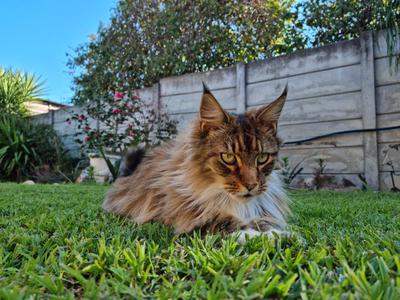
The idea that it's cruel to keep a cat indoors usually comes from genuine concern for the cat. Most people who feel this way aren't criticizing cat owners.
They're imagining how they would feel if they were never allowed to leave the house. Cats love to explore, climb, hunt, and watch the world around them, so it's easy to assume they'd be happier with unlimited freedom.
The difference is that a pet cat doesn't experience an indoor home the way we would.
To your Maine Coon, your home is their territory. It's where they sleep, eat, play, patrol, climb, watch birds through the window, greet their family, and feel secure.
They aren't counting the days until they can leave. For an indoor cat, home is where life happens.
Cruelty isn't determined by whether a cat goes outdoors. It's determined by whether their needs are being met.
A Maine Coon that has room to climb, things to investigate, daily play, and plenty of interaction can live a rich, satisfying life entirely indoors.
That's very different from keeping a wild animal in captivity. Domestic pets have evolved over thousands of years to live alongside humans, and their needs are very different from those of a lion in a zoo.
There's so much to know about this awesome breed! Join 1,200+ fellow Maine Coon lovers and get our free Daily Digest, for something new every morning:
While Maine Coons may have a strong hunting instinct, they don’t need to roam outside to be happy.
In fact, keeping a Maine Coon as an outdoor cat comes with a lot of risks. They’re big, but they’re not invincible - cars, predators, and even other cats can pose real dangers.
Plus, Maine Coons are a highly sought-after breed, which unfortunately makes them a target for theft.
That being said, if your girlfriend is concerned about giving a Maine Coon enough space and enrichment, there are ways to provide outdoor access safely.
Some owners build secure outdoor enclosures (also called "catios"), train their cats to walk on a harness, or set up enclosed yards with cat-proof fencing. These options give a Maine Coon the best of both worlds - fresh air and adventure without the dangers of free roaming.
If you're leaning toward an indoor cat, don't worry - Maine Coons do just fine inside as long as they have enough space to climb, explore, and play.
They're incredibly social and love spending time with their people, so plenty of interactive playtime and stimulation will keep them happy.
Ultimately, Maine Coons thrive in environments where they're safe, well cared for, and engaged - whether that’s indoors or in a controlled outdoor space.
It’s not about limiting their natural instincts; it’s about making sure they can enjoy life without unnecessary risks.
Hope this helps settle the debate!
~ Carrie
Can Maine Coon Cats Live Outside? FAQ's
Do Maine Coons need more outdoor time than other cats?
Maine Coons are active, intelligent cats, but they don’t require outdoor access to be happy. Like all breeds, they thrive on play, attention, and mental stimulation.
Because they have a history as skilled hunters, some people assume they need the outdoors.
In reality, they are just as well suited to indoor life. Any big indoor cat needs space, climbing areas, and interactive toys to engage their natural instincts.
Will a Maine Coon be unhappy if kept indoors?
A cat’s happiness depends on its environment, not whether it goes outside. With plenty of enrichment - scratching posts, climbing trees, window perches, and playtime - an indoor cat can live a full, content life.
Outdoor risks like cars, predators, and disease make indoor life the safer choice. If raised inside from kittenhood, most cats have no interest in venturing out because their needs are already met.
What are the safest ways to let a Maine Coon experience the outdoors?
A secure outdoor space is the best way to give a cat fresh air while keeping it safe. A catio (enclosed patio) allows for exploration without danger.
Leash training is another option, though it takes patience. Some owners build fenced areas with cat-proofing to prevent escapes. If supervised, short backyard visits can be safe, but free-roaming poses risks that shorten a cat’s lifespan.
Do indoor cats live longer than outdoor cats?
Yes, indoor cats typically live much longer. Outdoor dangers include cars, predators, fights, diseases, and extreme weather.
Cats that roam freely often have lifespans of 2–5 years, while indoor cats commonly live 12–15 years or more. Even with partial outdoor access, risks remain.
Keeping a cat inside with plenty of stimulation leads to a longer, healthier life without unnecessary exposure to hazards.
How do I keep an indoor Maine Coon entertained?
A large, active breed needs space to move and plenty to do. Cat trees, tunnels, and shelves allow for climbing and jumping.
Puzzle feeders and treat-dispensing toys keep their minds engaged. Regular playtime with wand toys or laser pointers helps burn energy.
Even simple things, like a bird-watching perch by a window, can provide entertainment. A happy indoor cat has variety in its daily routine.
Related: Indoor cats; Visitor Suggestions: Everyone's experience is different! Does your cat care about being outside? Do you have any tips or tricks regarding leash training or outdoor enclosures?
« Still deciding whether your cat should have outdoor access? Head back to our guide on letting cats outside to explore the pros, cons, and safest options.

Love this site?
You’ll love our magazine too.

Hi, I'm Carrie! As a native Mainer, Coonie mom and author, I've spent over 14 years helping cat owners understand their Coonies and mixes. Real experience, research-backed insights - that's my approach. Happy, healthy cats - that's the result!
Curious about my experiences? Check out my About Page!
Let's Connect! ⬇️
COPYRIGHT © 2010 - 2026 MAINE COON CAT NATION | All Rights Reserved
THIS WEBSITE DOES NOT SELL ANY PERSONAL INFORMATION.
