- Home
- Maine Coon Care
- Thin or Skinny Maine Coons
Why Maine Coons Often Look Skinnier Than You'd Expect
New Maine Coon owners often expect a big, substantial cat - and they're not wrong to. But somewhere along the way, a question starts forming.
The cat gets wet, or comes home from a grooming appointment, or stretches out across the floor one afternoon, and you realize you're looking at a much leaner cat than you expected.
Or maybe you've simply been waiting for your Coon to fill out, and it doesn't quite seem to be happening.
Maine Coons are supposed to be huge, right? Not exactly! One of the biggest surprises for new owners is discovering how much of that size is coat.
Underneath all that fur is often a long, lean, athletic cat - and that's completely normal. The real question is whether your cat actually is underweight - not just whether he looks it.
The Fur Is Doing a Lot of Work
Maine Coons are masters of optical illusion. A full ruff, thick britches, and a fluffy tail add enormous visual size. From above, the coat creates the impression of a broad, substantial body.

Then the fur gets wet, or a grooming appointment happens, and owners are often shocked by what's underneath.
What looked like a massive cat the day before may suddenly reveal a visible waist, long legs, and the lean, athletic build that was hidden beneath all that fur.
Nikki in Robertsville, Missouri wrote in about her four Maine Coon males - a 3-year-old at 19 pounds, a 2-year-old at 17 pounds, an 8-month-old at 11 pounds, and a 4-year-old at 12 pounds.
They had all just gotten haircuts, and she was worried they looked underweight.
In reality, three of the four were already large cats by Maine Coon standards. Nothing had changed except the amount of fur that had been hiding their actual shape.
This is why veterinarians rely more on what they can feel than what they can see.
A cat that looks skinny through the fur may be carrying exactly the right amount of muscle and condition underneath.
Big Doesn't Mean Round
When people picture a Maine Coon, they often imagine an enormous, broadly built cat with a lot of bulk. The reality is usually a little different.
Healthy Maine Coons are built more like athletes than bodybuilders. Long, rectangular, strong-framed - but not necessarily round or heavy looking.
Many have a naturally visible waist behind the ribs. Viewed from above, a healthy Coon shouldn't look like a solid rectangle from shoulders to hips.
This is one reason body weight alone doesn't tell the whole story. Two cats can weigh exactly the same, yet have very different body conditions depending on their frame, muscle mass, and overall build.
There's so much to know about this awesome breed! Get Maine Coon Musings, our free Daily Digest, for something new every morning:
Is That Belly Flap Fat?
Many Maine Coon owners notice a soft flap of skin hanging under the belly, near the back legs, and assume their cat is getting chubby.
That flap is called the primordial pouch, and it's a normal part of every cat's body.
Some cats have a small one you only notice when they stretch out. Others have a generous pouch that swings from side to side when they trot across the room!
It tends to show up around six months of age, and it doesn't go away with diet or exercise. Nobody knows exactly why cats have it.
The most common ideas are that the loose skin lets the back legs stretch farther when a cat runs and leaps, and that it adds a layer of protection for the belly during a scuffle, when cats rake at each other with their back feet.
Big cats like lions and tigers have one too. To tell a pouch from fat, feel it gently. A pouch is loose and jiggly, almost like a soft bag of skin, and you can still feel the ribs easily along the sides.
Fat feels firmer, stays put, and tends to round out the whole body, not just the lower belly.
A healthy Maine Coon can have a big swinging pouch and still have that visible waist behind the ribs.
If you're unsure, your vet can check your cat's body condition at the next visit.
The Maine Coon Magazine
There's no cat quite like a Maine Coon
Every month, The Maine Coon Magazine brings the Maine Coon world to you: stories from other owners, answers from people who know the breed, and seasonal know-how.
See inside the magazine →Growing Cats Can Look Surprisingly Lean
Maine Coons mature slowly. Many continue developing for several years, and they don't always grow evenly along the way.
Young Maine Coons often seem to stretch upward and outward before they fill out - taller, longer, and leggier almost overnight.
A few months later the chest broadens, muscle develops, and the body gradually catches up. It can be quite a journey to watch!
A young Maine Coon who is active, eating well, and developing normally may simply be in the middle of a growth phase.
Many don't reach their mature appearance until well after their first birthday. Patience is part of it.
How to Tell If Your Cat Is Actually Too Thin
Your hands will tell you more than your eyes here.
Feel the ribs - they should be easy to find beneath a thin layer of tissue, but not visible from across the room.
Feel along the spine and hips - the bones should be there, but not sharp or prominent. Check the thighs - well-conditioned cats have smooth, rounded muscle in the rear legs.
And think about change. Has your cat always looked this way, or are they becoming thinner over time?
A naturally lean cat is very different from a cat who is actively losing weight. If the answer is the latter, a vet visit is the right next step.
Most of the time, you have a perfectly healthy Coonie in there, hiding under all that magnificent fur.
Once you understand how these cats are actually built, "skinny" starts to look a whole lot more like "athletic."
And that's a pretty great thing to have stretched out across your floor!
« For more on keeping your Maine Coon healthy and thriving, head back up to the Care section.
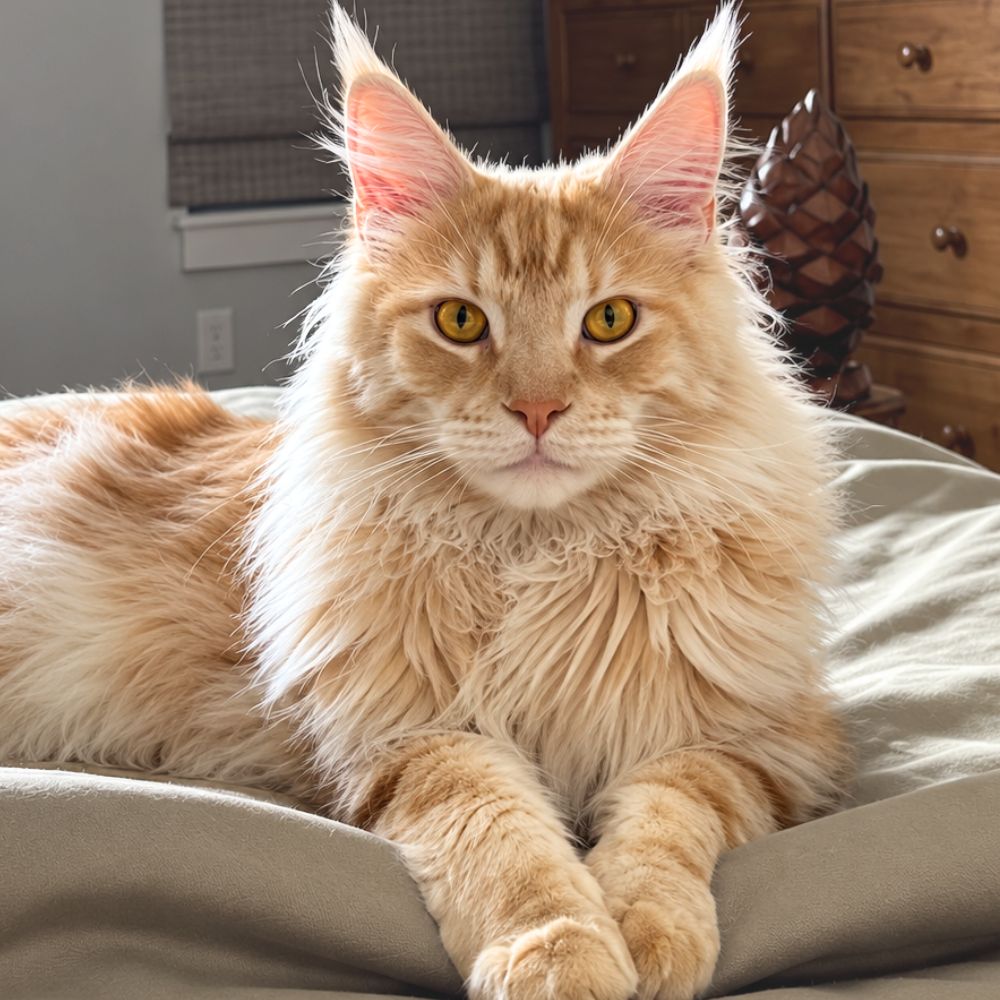
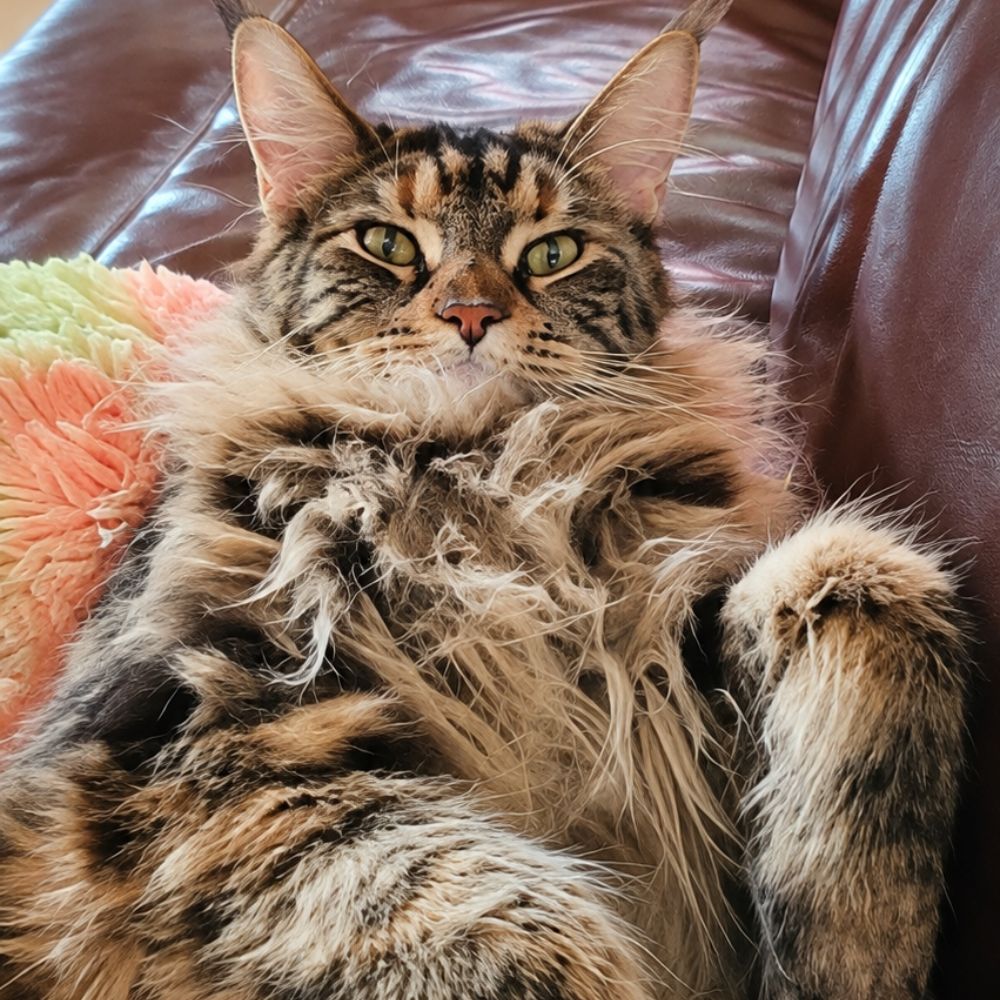
There's always room for a Maine Coon on the couch.
The Maine Coon Magazine brings the Maine Coon world to you, every month.
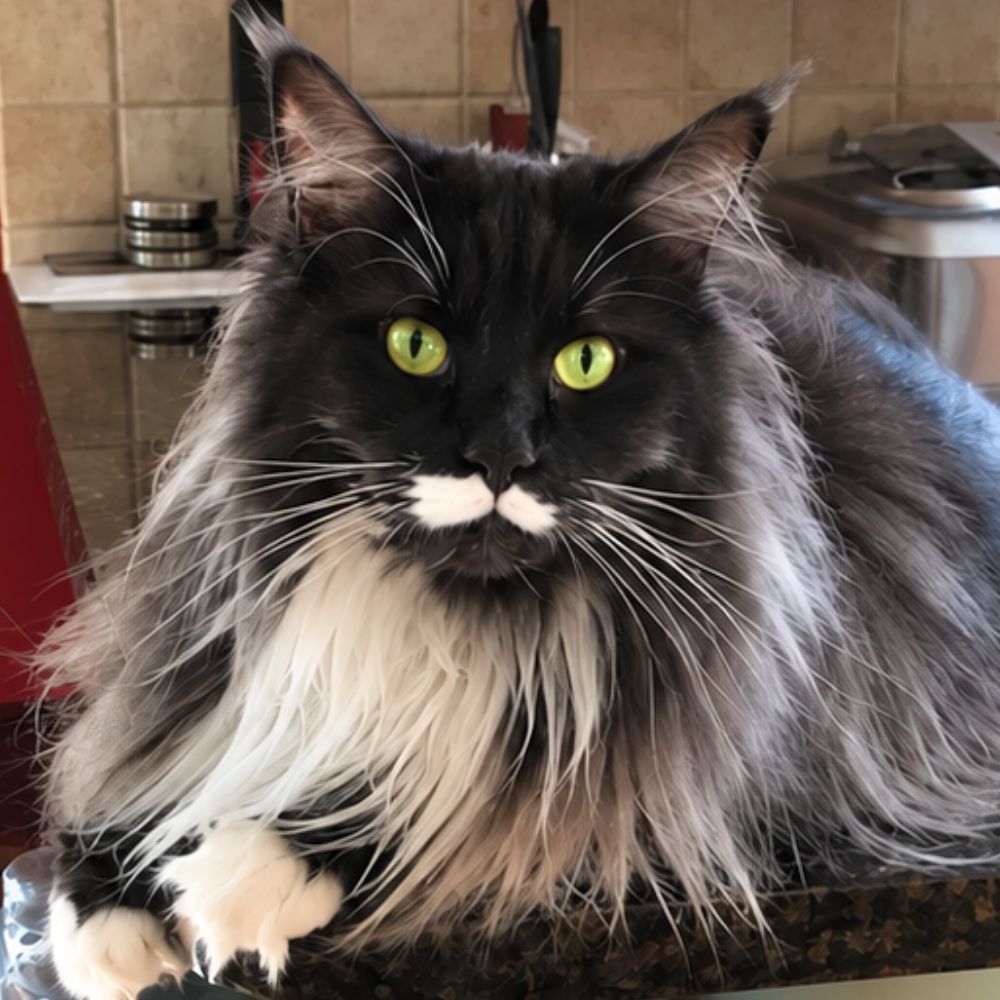
Do you “let” your Maine Coon on the counter?
The Maine Coon Magazine brings the Maine Coon world to you, every month.
Bringing the Maine Coon world right to you, every month.
See inside →
Hi, I'm Carrie! As a native Mainer, Coonie mom and author, I've spent over 14 years helping cat owners understand their Coonies and mixes. Real experience, research-backed insights - that's my approach. Happy, healthy cats - that's the result!
Curious about my experiences? Check out my About Page!
Let's Connect! ⬇️
COPYRIGHT © 2010 - 2026 MAINE COON CAT NATION | All Rights Reserved
THIS WEBSITE DOES NOT SELL ANY PERSONAL INFORMATION.
