- Home
- Maine Coon Cat Health
- Cat Oral Health
- Teeth and Gum Care
Maine Coon Teeth & Gum Health: What to Know
•
Dental health is an often overlooked part of cat care, but it's also one of the areas where small changes can matter more than people expect.
Red gums, bad breath, retained kitten teeth, and sudden mouth sensitivity are common sources of confusion, especially since cats tend to hide discomfort well.
Here, we look at what healthy teeth and gums usually look like in Maine Coons, how oral health changes with age, and which signs are worth a call to the vet, with real-life examples.
A Healthy Maine Coon Mouth: What's Typical
A healthy Maine Coon mouth looks much like a healthy cat mouth overall, with a few age-related changes along the way.
Healthy gums are pink and firm, not red, swollen, or bleeding. Mild color variation can occur, but persistent redness or inflammation isn’t considered normal.
Healthy teeth are clean and white, with only light tartar buildup over time. Heavy tartar, visible gum irritation, or foul breath are signs that dental care may be needed.
Some changes are expected as cats age. Kittens go through a teething phase as baby teeth fall out and adult teeth come in. In adults, gradual tartar buildup is common, especially without routine dental care.
Signs that may indicate dental discomfort include bad breath, drooling, pawing at the mouth, difficulty chewing, or a sudden change in eating habits. Because cats often hide pain, these signs are easy to miss.
Maine Coons don't have dental issues unique to the breed, but like all cats, they can develop gum disease, tooth resorption, and oral infections. Knowing what's normal makes it easier to spot when something isn't.
Below are real-life questions that show how dental and gum issues come up in everyday Maine Coon households, along with clear guidance on what they usually mean and when veterinary care is appropriate.
If you can't get enough of Maine Coons, you'll love our fun, free Daily Digest!

Retained Baby Teeth During Teething
We have a 5-month-old cream Maine Coon boy, and his teeth look very different from our older cats'.
He seems to have two sets of fangs, while our other cats only ever had one. Is this normal during teething, or should we have him checked by a vet?
- Lorraine Holbrook, UK
Reply:
Hi Lorraine,
What you're seeing is called retained deciduous (baby) teeth, and it's fairly common in teething kittens, including Maine Coons.
As adult teeth come in, the baby teeth are supposed to loosen and fall out. Sometimes the adult tooth erupts before that happens, which can make it look like your kitten has "double fangs."
In many cases, the baby teeth do fall out on their own. If one doesn't, it can lead to crowding, trapped food, or gum irritation later on.
This is one of those situations where a quick vet check is a good idea. Your vet can confirm whether the teeth are loosening normally and whether anything needs to be removed, often at the time of neutering if intervention is needed.
In the meantime, keep an eye out for redness, swelling, or any difficulty eating, as those would be reasons to have him seen sooner.
All the best,
Carrie
Reader Experiences:
Retained canine teeth
by Helen
Dogs and cats can retain baby canines, just like children can. If they don't come out, food can get trapped between the teeth and lead to infection or misalignment.
Many vets address this at the time of neutering so everything can be handled at once.
Kitten teething update
by Lorraine
We took him to see the vet nurse, who confirmed that some baby teeth hadn’t fallen out yet.
One may loosen on its own, but another will likely be removed when he's neutered.
It was reassuring to know this isn't serious. He was also weighed at 4.3 kg at 5 months, so he's growing well.
Severe Gingivitis in a Young Maine Coon
My 5-year-old Maine Coon, Missy, has severe gingivitis affecting her gums and tonsils. We’re at the vet about every two months.
She receives steroid injections and Medrone V tablets, and she’s already had one tooth removed.
Our vet says her teeth themselves look fine, but the inflammation keeps coming back. Is there anything else we should be considering?
- L. Richards, Poole, UK

Reply:
Severe gingivitis that persists despite regular veterinary care is frustrating and emotionally draining, especially when the teeth themselves appear healthy.
In cats, ongoing gum inflammation can sometimes be part of a broader inflammatory or immune-mediated condition rather than a simple dental problem.
When inflammation involves the gums and soft tissues (including the tonsils), management often focuses on controlling pain and inflammation rather than "fixing" the teeth alone.
If Missy is already under consistent veterinary care, the most important next step is not internet troubleshooting, but continued discussion with your vet about whether this pattern suggests a chronic condition such as feline gingivostomatitis or another immune-related issue.
These cases often require long-term management plans rather than one-time solutions.
It's also reasonable to ask whether referral to a veterinary dental specialist would add value, especially when symptoms persist despite treatment.
You're clearly doing right by her by staying engaged with her care. Chronic oral inflammation in cats is complex, and it's something that’s best handled in partnership with a veterinarian who can see her full history and progression.
All the best,
Carrie
Reader Experiences:
Daily brushing experience
I have three Maine Coons, and one of my boys looks a lot like your girl. I brush their teeth daily.
If you've never done it before, she may resist at first. If she's food-motivated, brushing followed by a treat (like catnip) helped mine accept it.
When I brush, I gently hold their head and work carefully. My cats are big and strong, but they understand I’m not hurting them. Over time, they've actually come to tolerate (even enjoy) tooth brushing.
Concerns about extractions
by: Lynne
If this turns out to be stomatitis, tooth removal is sometimes suggested. In my experience, that approach didn’t solve the underlying problem and felt extreme.
We worked through symptoms over time with veterinary guidance, and the inflammation improved.
Stomatitis can be very difficult, and it’s important to work closely with a vet you trust when weighing treatment options.
Water additives as supportive care
by: Tammy
If you're seeing the vet frequently and the teeth appear fine, it may be worth asking about additional supportive options. I've used dental water additives designed to reduce oral bacteria.
They're easy to use and were less disruptive than frequent cleanings in our case. They didn't replace veterinary care, but they were helpful alongside it.
Juvenile gingivitis experience
My Maine Coon has gingivitis also. I noticed gingivitis in my kitten around six months of age.
Antibiotics didn’t help much. At nine months, he had a dental cleaning and some gum tissue addressed because his teeth weren’t fully erupting.
Since then, I brush his teeth two to three times a day using CET toothpaste and a small brush. He's doing very well now. Brushing has made the biggest difference for us.
Unusual Gum Lesions and Immune-Related Testing
My 3-year-old Maine Coon has been diagnosed with leukoplakia. My vet said this is more common in humans and hasn’t seen it in cats before. His gums are inflamed, and they're testing him for FeLV and FIV.
He lives in an apartment, never goes outside, and has no contact with other cats. How could this happen?
- Maia, Australia
Reply:
Leukoplakia isn't commonly diagnosed in cats, so it's understandable that this feels alarming, especially when the condition is more familiar in human medicine.
When veterinarians recommend testing for FeLV or FIV in a case like this, it’s typically part of a rule-out process, not an assumption of exposure. Some immune-related or inflammatory conditions can produce similar oral changes, and bloodwork helps narrow down possible causes.
Even in indoor-only cats, testing is still appropriate. Certain conditions can be present from birth, develop independently of lifestyle, or be unrelated to contagious exposure altogether.
What matters most right now is that your vet is approaching this methodically. Identifying or ruling out underlying causes is the safest path forward, and it sounds like your cat is receiving attentive care.
While it can be frustrating not to have immediate answers, this kind of oral inflammation often requires investigation over time rather than quick conclusions.
All the best,
Carrie
Reader Experiences:
Understanding leukoplakia as a sign, not a diagnosis
by: Helen
Leukoplakia itself isn't a disease but a sign that can accompany other conditions.
In people, it's seen alongside cancer or immune compromise, which is likely why your vet is doing blood tests. Once the underlying cause is identified, treatment can begin and the oral changes may resolve.
Follow-up from the original owner
by: Maia
Thank you for the responses. I suspect my boy may have had underlying issues before I brought him home from the breeder. He's been highly strung since day one, very selective with food, and lean for his size.
My vet is testing bloodwork and stool samples to look for underlying causes. So far, leukoplakia is the only finding, and I'm hopeful we'll get clearer answers. I just want him to live a long, healthy life.
Another condition to be aware of
by: Buster’s human
Our cat developed a rodent ulcer that affected the gums and roof of the mouth and was difficult to treat.
It caused swelling, discoloration, and weight loss. In persistent or worsening cases, it may be worth asking your vet whether similar conditions should be ruled out.
Are Mouth Ulcers Common in Maine Coons?
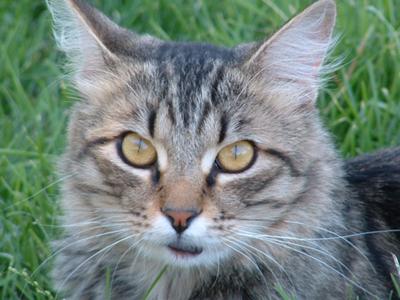
Mouth ulcers; are these common in Coons?
Buster developed a swollen lip about a year ago. The vet diagnosed rodent ulcers and treated him twice.
Now the ulcers have spread to both lips, and he's going back for additional treatment and laser therapy.
This is the first cat I’ve had with this issue, and I’m wondering whether mouth ulcers are something Maine Coons are prone to in general, or if this is just bad luck.
- Rose, Fresno, CA
Reply:
Hi Rose,
Poor Buster. Mouth ulcers can be upsetting to see, and they often require persistence to manage.
Rodent ulcers (part of the eosinophilic granuloma complex) are not considered a Maine Coon-specific condition.
They can occur in cats of any breed and are more commonly linked to immune response or allergic triggers than to genetics.
Because this is a medical issue, ongoing veterinary care is exactly where this belongs, especially if lesions are spreading or recurring. In some cases, ulcers respond well to treatment; in others, additional investigation or second opinions are appropriate.
The most important thing is continuing to work with your vet and monitoring how Buster responds. You're doing the right thing by staying on top of it.
I hope today's visit brings him some relief.
All the best,
Carrie
Reader Experiences:
Mouth Ulcers in Cats
by Maia (Wollongong, Australia)
I had a cat who developed what was thought to be a rodent ulcer. After months of treatment with no improvement, a second vet diagnosed carcinoma.
Surgery saved his life, though I wish I had sought a second opinion sooner. He was not a Maine Coon.
I truly hope Buster's case stays straightforward, but I do recommend second opinions when ulcers don’t respond as expected.
Lip Ulcers
by Helen
I had a cat with mouth ulcers caused by an allergic reaction. My vet asked about food bowls, and plastic turned out to be the culprit.
Switching to glass bowls resolved the issue completely. Dollar-store glass dishes work well and are dishwasher safe.
Chewie
My Maine Coon developed a mouth ulcer recently. I don’t believe it’s common in the breed, but I’m following along to learn more.
Buster and Rodent Ulcer
by Buster’s mom
Thank you for the replies. Buster's ulcers are textbook in appearance. We've switched food dishes, continued medication, and are seeing slow improvement. He's still very much himself - affectionate, vocal, and insistent on shoulder time.
We Are Having Some Success
by Buster’s mom
After additional cortisone treatment, daily prednisone, L-lysine, and switching away from plastic bowls, Buster is improving. He's not thrilled with the vet visits, but he's feeling better.
Rodent Ulcer
by Buster’s caregiver
We've had success using cyclosporine prescribed for humans. Our pharmacist worked with us to make it affordable. It's made a noticeable difference.
« Return to Cat Oral Health for a complete look at dental care, gum health, and common oral issues in cats.
Have a mouth care scenario you don’t see covered?
You’re welcome to share the details below. Many of the questions we receive help shape future updates and answers on MCCN, especially when they highlight common, shared concerns.
Love this site?
You’ll love our magazine too.

Hi, I'm Carrie! As a native Mainer, Coonie mom and author, I've spent over 14 years helping cat owners understand their Coonies and mixes. Real experience, research-backed insights - that's my approach. Happy, healthy cats - that's the result!
Curious about my experiences? Check out my About Page!
Let's Connect! ⬇️
COPYRIGHT © 2010 - 2026 MAINE COON CAT NATION | All Rights Reserved
THIS WEBSITE DOES NOT SELL ANY PERSONAL INFORMATION.
