- Home
- About Maine Coon Cats
- Maine Coon Characteristics
Maine Coon Characteristics: What Makes This Breed Different?
The Maine Coon characteristics are often described a certain way. Think: gentle giants, social companions, water loving, chirping and trilling, growing for 3-5 years, dog-like cats.
But those ideas only scratch the surface. Every Maine Coon is a character. Some are chatty, some aloof. Some love water, others act like it's lava. But they all share a few trademark traits, a breed standard and even a mysterious history.
If you are looking into this breed, you are asking: "What makes Maine Coons different from other cats?"
What are these distinguishing characteristics? Let's get to know this breed that keeps going viral online!
If you can't get enough of Maine Coons, you'll love our fun, free Daily Digest!

The Reputation vs The Reality
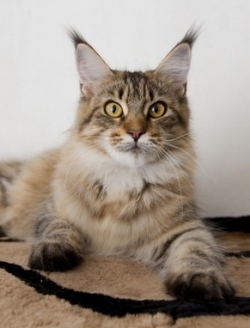
Have you ever noticed that when it comes to different breeds, they each create a certain image in your head based on known "reputation"?
A Persian is dignified, silky, cultured. A Siamese is vocal, athletic, smart. A Ragdoll is cuddly and easy-going.
And a Maine Coon? Oh, that's a whole other thing! That reputation is feels bigger than their features, and more than their personality.
There is a "wow factor" - and a mystery to them. They are just a little bit wild looking, and big, which makes them seem exotic, and anything exotic is alluring.
Add in the stories, the stereotypes, and the larger-than-life examples online, and that allure only grows.
These cats show up again and again in viral TikTok videos showing off their sheer size from dramatic angles, or kittens padding around with giant polydactyl feet, or riding on someone's shoulders in a city, or even wearing a life vest and riding a canoe.
And when the biggest, fluffiest, most dramatic examples are what people see most often, those examples start to feel like the norm.
Pinterest and breeder sites repeat certain phrases that start to create a mythology around the breed. Think: "Gentle Giants" or "Dogs of the Cat World".
When people say these things, what are they actually referring to? What do those phrases really mean?
The Maine Coon characteristics that set them apart are real. They do have a mysterious aura, but much of that aura comes from their size, their development timeline, and how selectively people show them online.
So what characteristics actually make them different - beyond the mythology?
Size and Stature:
One of the most notable characteristics of Maine Coons is their impressive size and sturdy build. Everyone loves to see a massive Maine Coon!
They are often described as one of the largest domestic cat breeds, thanks to their long bodies, heavy bone structure, and substantial build.
Bear in mind that massive size is the exception, not the rule. Most responsible breeders do not breed primarily for extreme size. Any litter could have some larger and some smaller than average kittens.
Adult males typically weigh between 13 to 18 pounds, while females often range from 8 to 12 pounds.
Their size is paired with a muscular frame, which gives them a powerful, grounded presence.
The Famous 3-5 Year Growth Period
It's not uncommon for these cats to continue growing until they are around three to five years old, reaching their full size and stature gradually. By that point, most owners are far more focused on personality than pounds.
So while many people hope for a truly gigantic cat, size alone rarely defines the experience of owning one.
A Coonie of any size, with that sturdy body and shaggy fur, will be quite a specimen to behold.
The Gentle Giant Perception
The body is described as rectangular. It's a strong, sturdy body, well proportioned. The neck is medium in length, the chest is full, legs are medium, all contributing to a balanced appearance.
No feature is overemphasized or out of proportion when it comes to Maine Coon characteristics.
When folks call them "Gentle Giants," they’re talking about the contrast between a big, sometimes wild-looking cat and an absolutely, completely sweet and loving personality.
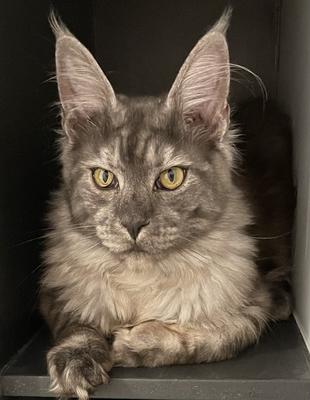
When it comes to size, there’s a lot to consider. How realistic is it to expect your new Coonie to be a big one?
Are they really all that large - and how can you tell? We cover growth charts, smaller-than-average Maine Coons, and whether there's truly such a thing as a "mini version."
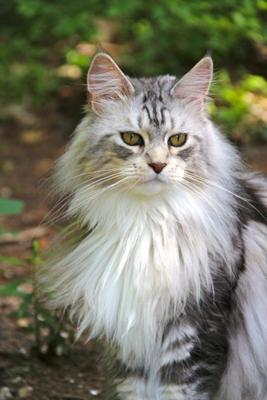 Murphy, a gorgeous Silver Maine Coon
One of the biggest misconceptions about Maine Coons is that because they look big and exotic, they must come with a list of caveats — high-maintenance coats, impossible care needs, or impossible temperaments.
In reality, Maine Coons make loving, social companions who often integrate deeply into family life but don’t require heroic effort just to live with them. They’re not aloof or indifferent — most seek interaction, games, and daily presence from their people, and many will follow you from room to room, chirping or trilling their thoughts as they go.
Yes, they have long coats and robust builds, but that doesn’t automatically mean “difficult.” Regular brushing and basic grooming help their fur stay healthy, and that’s hardly a deal-breaker for most owners — it’s just part of life with a longhair. Many Maine Coons are playful, adaptable, and even deceptively easy to live with compared to how dramatic they look.
It’s also worth knowing that the old idea of cats as entirely independent roommates doesn’t fully apply here — these animals want to be part of your world. They’ll greet you at the door, investigate what you’re doing, and offer companionship that feels warmer and more present than many cats of other breeds.
So your expectation should be this: a Maine Coon isn’t a high-maintenance mystery beast — they’re a big personality with a big heart, and they bring an affectionate, engaging presence to the home without making everyday life harder than it needs to be.
Originating from barn cats and seafaring felines, these charming cats evolved to adapt to the harsh winters of Maine, in the United States.
With tufted ears and large paws for navigating snow, they thrived in the rugged Northeast New England environment.
Over time, their friendly nature and distinctive features propelled them into the spotlight, making them one of America's most beloved and iconic cat breeds.
Starting From The Top:
One of the most defining Maine Coon characteristics has to be those amazing ears. They are large and wide, with long tufts of fur coming out of them.
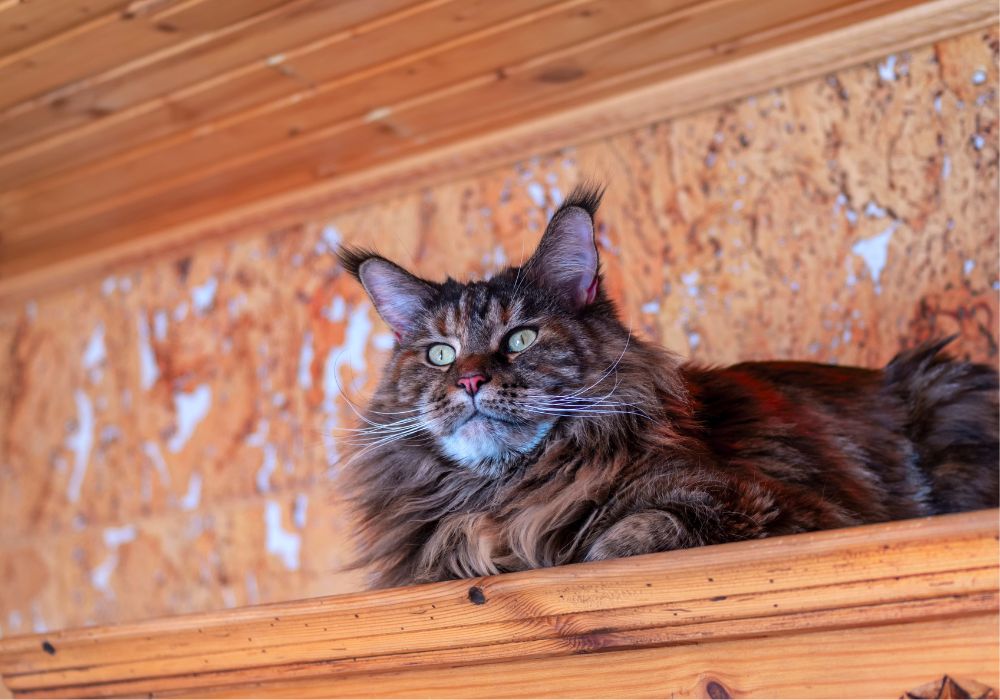
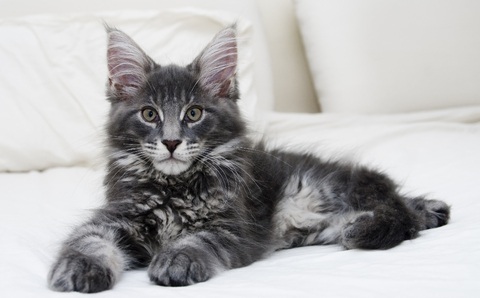 Classic Silver Maine Coon Kitten
A Thick Waterproof Coat:
It's easy to see why the Maine Coon Cat breed has been referred to as a "Shag." The shaggy coat is longer and softer underneath.
It's smooth and water-repellent on the top. Coonies boast a luxurious coat that is dense, water-resistant, and soft to the touch.
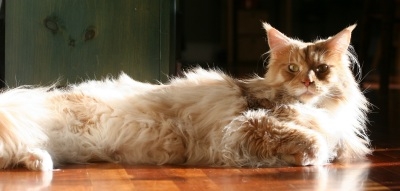 Red Silver Cameo Male Maine Coon Cat
Extremities:
Another defining characteristic is large feet with tufts of fur coming out of them, and coming out from between their toes. They are quite unusual, and most would agree, endearing.
Speaking of feet, many people wonder where to find one that is a polydactyl cat. "Back in the day," many were polydactyl, or as we say in Maine, double-pawed. It's a Maine Coon characteristic treasured by many.
When they were accepted into the cat fancy, it became necessary for this recessive gene to be "weeded out."
Then they would conform to the newly established breed standard, and become prize-winning show cats! This beloved characteristic is still carried on by a few breeders.
The most magnificent of the Maine Coon characteristics would have to be that unbelievable tail.
One of their most distinctive features is their bushy tail - long and plumed it adds to their majestic appearance.
Like the feathers of a peacock, it is his pride and joy, his trademark which can be duplicated by none other. More on what makes this tail so iconic.
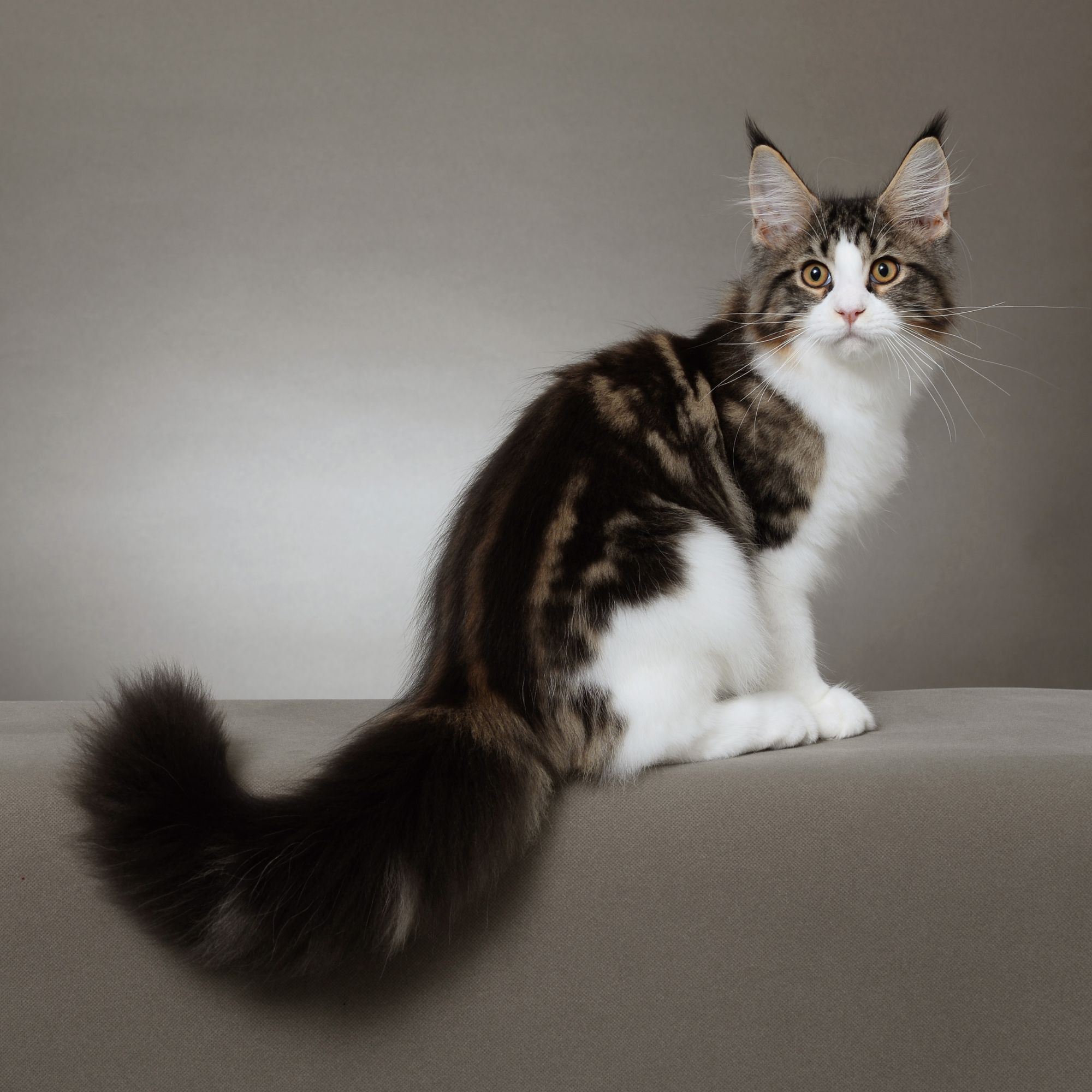
This is a tail that has to be seen to be believed. It's full, long, and heavy. It drags along the ground behind him much like a fancy feather-duster!
Sociability and Interaction with Humans and Other Pets:
 Little Black Girl Maine Coon Kitten
Coonies are renowned for their amiable nature and sociable demeanor. They form strong bonds with their human companions, often seeking out interaction and companionship.
These cats are not just content to share a living space; they actively engage with their human family members, displaying an innate curiosity and desire to be part of daily activities.
Additionally, this breed is known for their compatibility with other pets. Their friendly disposition extends to fellow feline or canine companions, fostering a harmonious environment in multi-pet households.
Temperament of a Maine Coon Cat:
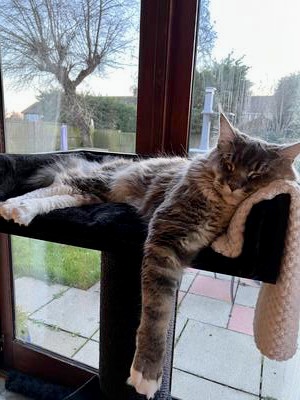
One of the endearing qualities of this breed is their affectionate nature.
These cats enjoy being in close proximity to their human family members, often seeking out snuggles. Many of them are lap cats!
Their gentle demeanor and loving disposition make them wonderful companions for anyone who wants a cat that craves and reciprocates affection.
Whether it's a gentle head bump or a soft purr, they excel in expressing their love, creating a warm and inviting atmosphere in any home.
Communication
Vocalizations and Different Sounds:
Coonies are chatterboxes with a wide array of vocalizations. From chirps to trills and even melodic meows, they express themselves vocally.
Each sound carries its unique meaning, adding a layer of communication between cat and owner.
Understanding these nuances enhances the bond, making for delightful conversations and interactions.
Body Language and Gestures:
Equally expressive through body language, these felines communicate with eloquent gestures. Tail position, ear movements, and subtle facial expressions convey their feelings.
A raised tail signifies contentment, while flattened ears may mean discomfort.
These gentle giants use their entire bodies to express emotions, creating a non-verbal dialogue that strengthens the unique connection between Coonies and their human companions.
Paying attention to these cues deepens the understanding of their needs and enriches the rewarding relationship with these sociable feline companions.
Common Genetic Predispositions
While this is generally a healthy breed, any purebred pet may be predisposed to certain health concerns.
Responsible breeders will use genetic testing to avoid breeding kittens with certain health issues:
Hip Dysplasia:
Hip Dysplasia is a hereditary condition that can affect their hip joints. Regular veterinary check-ups are crucial to identify and manage this condition early.
Providing a well-balanced diet and encouraging moderate exercise can contribute to maintaining joint health.
Spinal Issues:
Maine Coon cats may also be susceptible to Spinal Muscular Atrophy (SMA) due to their size and elongated bodies.
Responsible ownership involves monitoring their physical activity, ensuring they have proper support during rest, and consulting with a veterinarian if any signs of discomfort or mobility issues arise.
By staying vigilant and proactive, pet owners can play a crucial role in maintaining the overall well-being of their furry family members.
Hypertrophic Cardiomyopathy:
Hypertrophic Cardiomyopathy (HCM) is a genetic disease. It's a heart condition where the muscle thickens. Regular vet visits help monitor heart health.
Though it's more common in the breed, early detection and care can contribute to a longer, happier life for these big-hearted furballs.
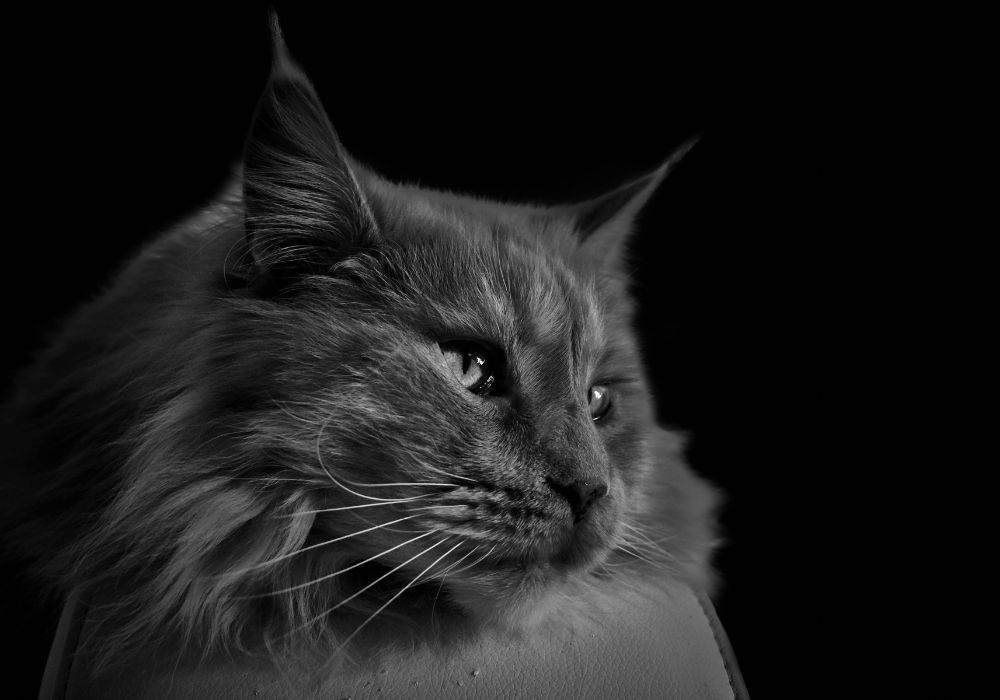
So what makes these beauties so unique? For those who have owned a one of these special friends it's all so clear.
And then, to put it into words takes a little more time.Of course, every cat is special.
Each has his own unique qualities, Coonie or not. Our lives wouldn't be quite the same without them. Which is your favorite of the Maine Coon characteristics?
Love this site?
You’ll love our magazine too.
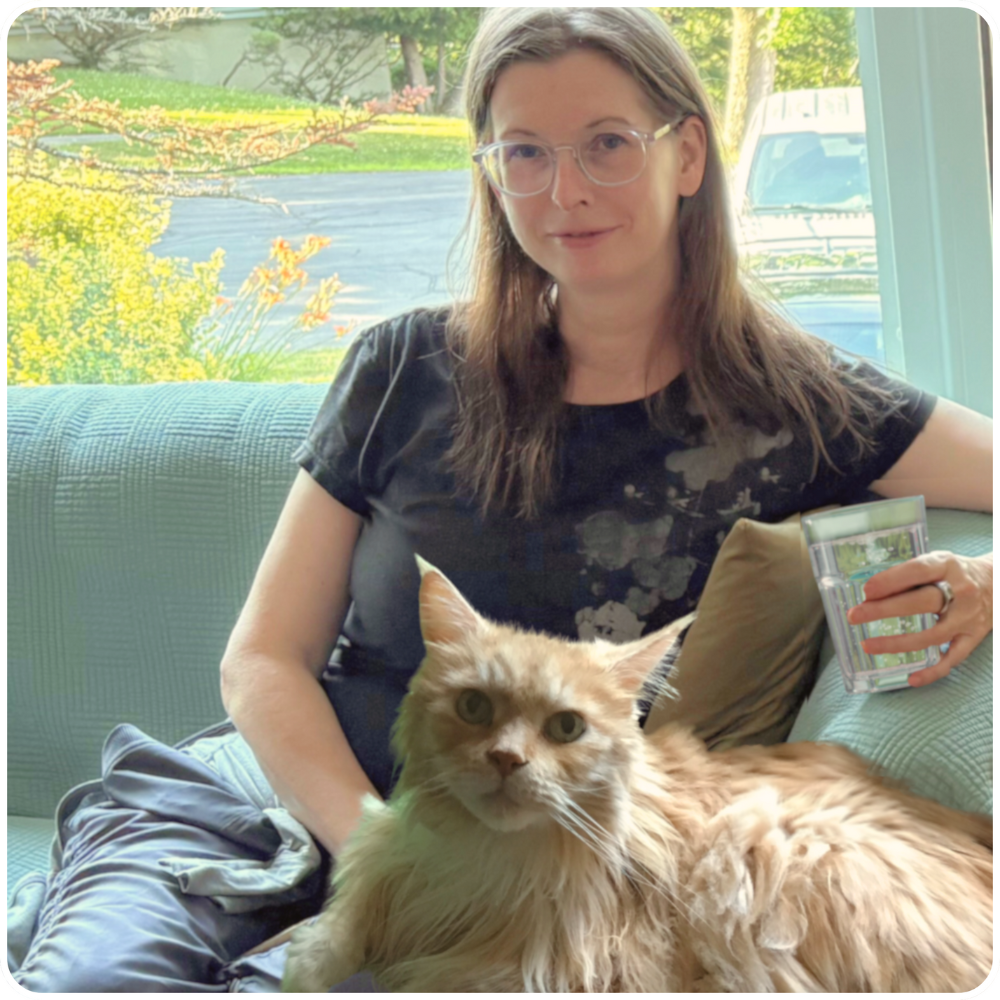
Hi, I'm Carrie! As a native Mainer, Coonie mom and author, I've spent over 14 years helping cat owners understand their Coonies and mixes. Real experience, research-backed insights - that's my approach. Happy, healthy cats - that's the result!
Curious about my experiences? Check out my About Page!
Let's Connect! ⬇️
COPYRIGHT © 2010 - 2026 MAINE COON CAT NATION | All Rights Reserved
THIS WEBSITE DOES NOT SELL ANY PERSONAL INFORMATION.
