- Home
- About Maine Coon Cats
- The Maine Coon Coat
- Maine Coon Cat Fur Questions
Disclosure: this site is reader-supported. When you buy through links on our site, we may earn a small commission, at no extra cost to you.
Maine Coon Fur and Tail Care Explained
Maine Coon fur and tails are often misunderstood - especially when it comes to grooming tools, shedding, bathing, and managing long coats through the seasons.
Here, we address the most common points of confusion and explain how Maine Coon coat care actually works, based on breed traits and real-world care needs.
Below, you'll find clear explanations followed by illustrative examples drawn from real owner scenarios.
These examples help show how the same principles can look a little different from one household to another, without changing the underlying guidance.
If you can't get enough of Maine Coons, you'll love our fun, free Daily Digest!

Is It Normal for a Cat to Focus on Her Tail?~New
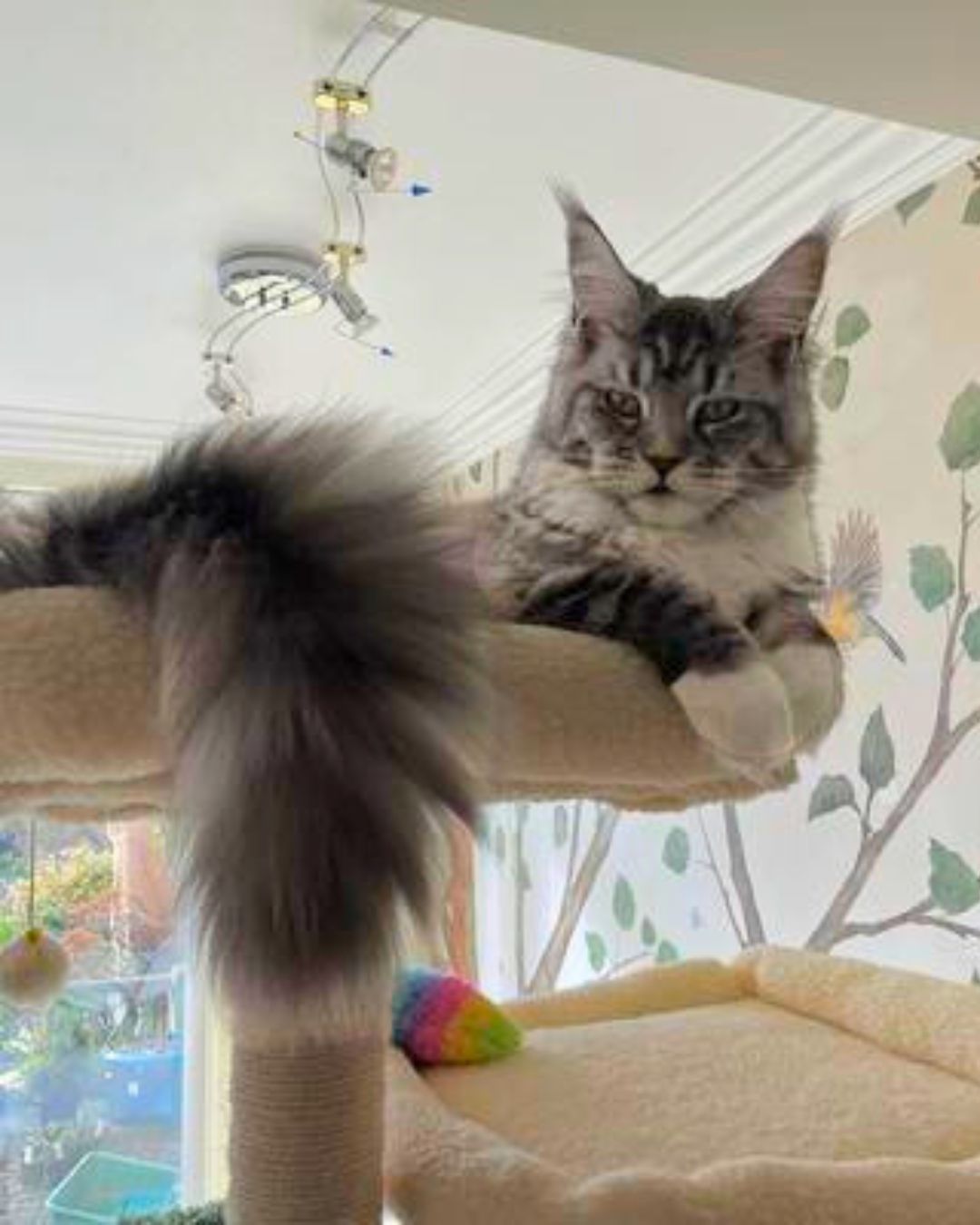
Pinny spends time on the end of her tail quite often. She is brushed regularly and allows me to brush her tail. She doesn't move when I brush it and when I touch it there is no problem. Am I worrying for nothing?
- Shirley
Reply,
Hi Shirley, Pinny is looking gorgeous!
This is totally normal. Some cats simply pay more attention to their tails (or another body part) than others, especially during routine grooming.
If Pinny is comfortable when her tail is touched or brushed and shows no signs of pain or irritation, there's nothing concerning about this behavior.
You're very attentive, and what you're describing falls well within normal range.
All the best,
Carrie
Does Your Maine Coon Have a Favorite Spot to Groom?
When you watch your cat during a quiet grooming session have you noticed they keep focusing on the same area? Many Maine Coons have a favorite one.
For one Maine Coon, it's the end of the tail. Another seems determined to keep one front paw spotless.
Some spend extra time working through the fur on their chest or shoulder, while others seem to fuss over one little patch of belly fluff.
They just seem to have a favorite place to finish, or one area that gets a little (or a lot!) more attention than the others.
Most of the time it's simply a habit, the same way people have small routines they repeat without thinking.
As long as the skin looks healthy, the fur isn't thinning, and your cat isn't showing signs of discomfort, there's usually no reason for concern.
If the grooming suddenly becomes intense, leaves bald spots, causes redness, or your cat seems bothered when that area is touched, mention this to your veterinarian.
Pain, allergies, skin irritation, or stress can sometimes show up as excessive grooming.
Once you notice a quirky favorite spot, you'll probably catch your Maine Coon returning to it daily!
There's so much to know about this awesome breed! Join 1,200+ fellow Maine Coon lovers and get our free Daily Digest, for something new every morning:
Is The FURminator Safe?
I've heard how efficient the FURminator is. The thing is, I've seen a photo online where the owner seemed to have stripped off a Maine Coon's guard hairs.
I've hesitated buying one because of that photo, and I also assumed tools like this were more for animals like chinchillas. Perhaps I'm wrong?
- Judy, UK
Reply:
Hi Judy,
This question comes up often, especially after people see photos like the one you described.
Yes, I do use a FURminator. Used correctly, it does not strip guard hairs or damage a Maine Coon’s coat. What it removes is hair that has already shed and is ready to come out, but hasn’t fallen yet.
When a coat looks thinned or uneven after using a deshedding tool, it's almost always because the tool was overused in the same area, not because of the tool itself. Any grooming tool can cause problems if it's used too aggressively or too often.
The key with a FURminator is moderation. Light pressure, a few passes at a time, and short sessions work best.
Used this way, Maine Coons are typically comfortable with it, and it can significantly reduce loose fur without harming the coat.
I use it in small spurts rather than long grooming sessions, and that approach has worked well here.
Bottom line: the FURminator is safe and effective for Maine Coon fur when used properly. Technique matters far more than the tool itself.
All the best,
Carrie
Does Maine Coon Cat Fur Shed Much?
Do they shed much? Our last cat, a Siberian, hardly shed at all. Are they related to Siberians?
- Reader question
Reply:
They do shed, but how much varies from cat to cat.
Coat texture makes a big difference. Some Maine Coons have a silky coat that releases less visible hair, while others have a softer, fluffier coat that sheds more and is more prone to forming small clumps of loose fur.
Regular brushing helps manage this significantly. Using a brush designed to remove loose undercoat can reduce how much fur ends up around the house.
As for the comparison to Siberians: Maine Coons are not known to be directly related to Siberian cats, even though they can look similar.
It's possible they share very distant ancestors, but there's no clear lineage connection. Their coat types are comparable, which is why shedding levels are often similar as well.
In practice, a Maine Coon would not be expected to shed dramatically more than a Siberian. Individual coat type and grooming routine matter more than the breed name alone.
All the best,
Carrie
Do Maine Coon Cats Shed?
Do Maine Coon cats shed? And what about allergies?
- Dixie, Salida, CO
Reply:
Yes, Maine Coon cats do shed. All cats shed, and a Maine Coon will typically leave a bit more visible hair simply because of the length of the coat.
Shedding tends to increase seasonally, especially in the spring as the heavier winter coat is released. Regular brushing helps manage this and prevents mats from forming.
As for allergies: Maine Coons are not hypoallergenic. No cat breed is truly non-allergenic.
Some people with mild allergies find they tolerate certain cats better than others, but that varies from person to person and from cat to cat.
If allergies are a concern, the safest approach is to spend time with the specific cat you're considering and see how you react. That decision shouldn't be made based on breed reputation alone.
All the best,
Carrie
Give Your Coon A Bath?
Is it OK to give your Coon a bath? She doesn’t seem to enjoy it.
- Reader question
Reply:
Yes, it’s okay to bathe a Maine Coon. That said, regular baths aren’t usually necessary for indoor cats who stay clean and don’t have strong odors.
Many cats go their entire lives without frequent bathing. Others occasionally need one after getting into something messy or sticky. When a bath is needed, a quick wash using a mild, cat-specific shampoo is sufficient.
One important consideration is temperature. After a bath, a Maine Coon should be dried promptly and kept warm so they don’t get chilled, especially in cooler weather.
Between baths, light spot-cleaning with waterless cat shampoo wipes can help keep the coat fresh without fully bathing.
All the best,
Carrie
How Do You Care For Fur That Mats and Tangles Easily?
How do we care for his fur when brushing is difficult? I try to brush often, but he resists and sometimes bites, so I can only manage very short sessions.
When his coat is long he mats easily, and I end up cutting knots or having him shaved to keep it manageable. What's the right approach for caring for a Maine Coon coat without constant shaving?
- Catherine, Montreal
Reply:
Caring for a Maine Coon’s coat can be genuinely frustrating when brushing turns into a battle - especially when you're clearly trying to do the right thing and your cat just isn't having it.
The good news is that what you're experiencing is very common. Even with regular grooming, mats can still develop, particularly in high-friction areas like the neck ruff, belly, and hindquarters.
That doesn’t mean you're failing, it means you’re dealing with a coat that's doing what long coats do.
When a cat resists brushing, short, frequent sessions really are your best friend.
Twenty seconds here and there is often more effective (and far less stressful for both of you) than trying to push through a longer session.
Those brief passes still remove loose fur before it has a chance to tangle.
Tool choice can also make a noticeable difference. Brushes designed to remove loose undercoat (like the FURminator) can help reduce mat formation when used gently and sparingly.
Introducing any new tool slowly is key, especially for a cat who already associates grooming with discomfort.
Shaving isn't harmful, but it usually doesn’t need to be the default solution.
A Maine Coon’s coat serves a purpose, and with steady, manageable maintenance, most coats can be kept under control without frequent shaving.
Keeping the coat clean also helps, since dirty fur tends to mat more quickly.
There isn't a single trick that works for every cat. The goal isn't perfection, it's finding a rhythm your Coonie can tolerate and sticking with it over time.
You’re clearly paying attention and trying to care for him well, and that already puts you on the right track.
All the best,
Carrie
Maine Coon Cat Fur in Warm Weather
Because of their long fur, do Maine Coon cats get too hot in warm weather? Do they need to be trimmed during the summer?
- Brett, Irvine, CA
Reply:
Maine Coon cats can feel the effects of warm weather, just like any other pet.
Long fur doesn't automatically mean a cat can't tolerate heat, but it does mean owners should be attentive to comfort.
Routine trimming isn't necessary for most Maine Coons. Some owners choose a summer trim, such as a lion cut, but this is a personal choice rather than a requirement.
A well-maintained coat can actually help regulate body temperature.
The most important factor is the cat’s environment. Maine Coons should be kept indoors, and maintaining a comfortable indoor temperature is usually sufficient.
A good rule of thumb is to use your own comfort as a guide - if the home feels uncomfortably warm to you, it likely does to your cat as well.
Owners should also be aware of general heat safety and signs of heat stress, especially during hot spells.
All the best,
Carrie
Reader Experiences:
I have a Samoyed dog, a breed that works in cold climates and has far more coat than a Maine Coon.
In summer, I simply avoid taking him out during the hottest hours of the day.
My longest-haired cat has access to an enclosed patio, but she chooses to stay inside during peak heat.
- Jessy
Can a Sudden Change in Fur Consistency Signal a Problem?
I came home to find her lethargic and unusually whiny. Her coat feels drier than normal and almost coarse. Should I be worried?
- Jared Farrington, Bozeman, MT
Reply:
Yes, this is something that warrants a call to your veterinarian.
A sudden change in behavior, especially lethargy, is never something to ignore.
Changes in coat texture can sometimes accompany underlying health issues, but there are too many possible causes to assess safely online.
Dry or coarse fur can be associated with dehydration or illness, but the presence of lethargy is the more important signal here.
Your veterinarian is best equipped to help you determine whether this needs immediate attention or careful monitoring.
Many veterinary offices offer phone advice or after-hours call services. A quick call does not always mean an office visit - often a vet can tell you what symptoms to watch for and whether your cat should be seen right away.
If you're unsure and symptoms are persisting or worsening, seeking veterinary guidance promptly is the safest course of action.
All the best,
Carrie
How Long Does Fur Take to Grow Back After Being Shaved or Cut?
I recently took in a stray Maine Coon kitten who appears to have had her mane and belly fur cut or shaved before she found her way to me.
Sophie is about 6-8 months old and otherwise looks very much like a Maine Coon - ear tufts, tail, paws, the whole look.
How long does it take for fur like that to grow back? Cat hair doesn't grow the same way human hair does, right?
- jrdeney, Washington
Reply:
This comes up fairly often with rescued or rehomed long-haired cats.
Yes, cat fur grows back through the normal shed-and-regrow cycle, not continuously like human hair.
When a Maine Coon's coat is shaved or cut, the fur will fill back in, but it does so gradually and unevenly at first.
In most cases, you'll start to see noticeable regrowth within a few months. A fuller return of length and density often takes around six months, sometimes longer, especially in young cats whose adult coat is still developing.
Good nutrition, a low-stress environment, and time are the biggest factors. There's no way to safely "speed it up," but once the coat cycle catches up, it does normalize.
It sounds like Sophie landed exactly where she needed to.
All the best,
Carrie
« Back to Maine Coon Coat: length, texture, grooming needs, and how the iconic mane develops.
Have a fur or tail care scenario you don’t see covered?
You’re welcome to share the details below. Many of the questions we receive help shape future updates and answers on MCCN, especially when they highlight common, shared concerns.
Love this site?
You’ll love our magazine too.
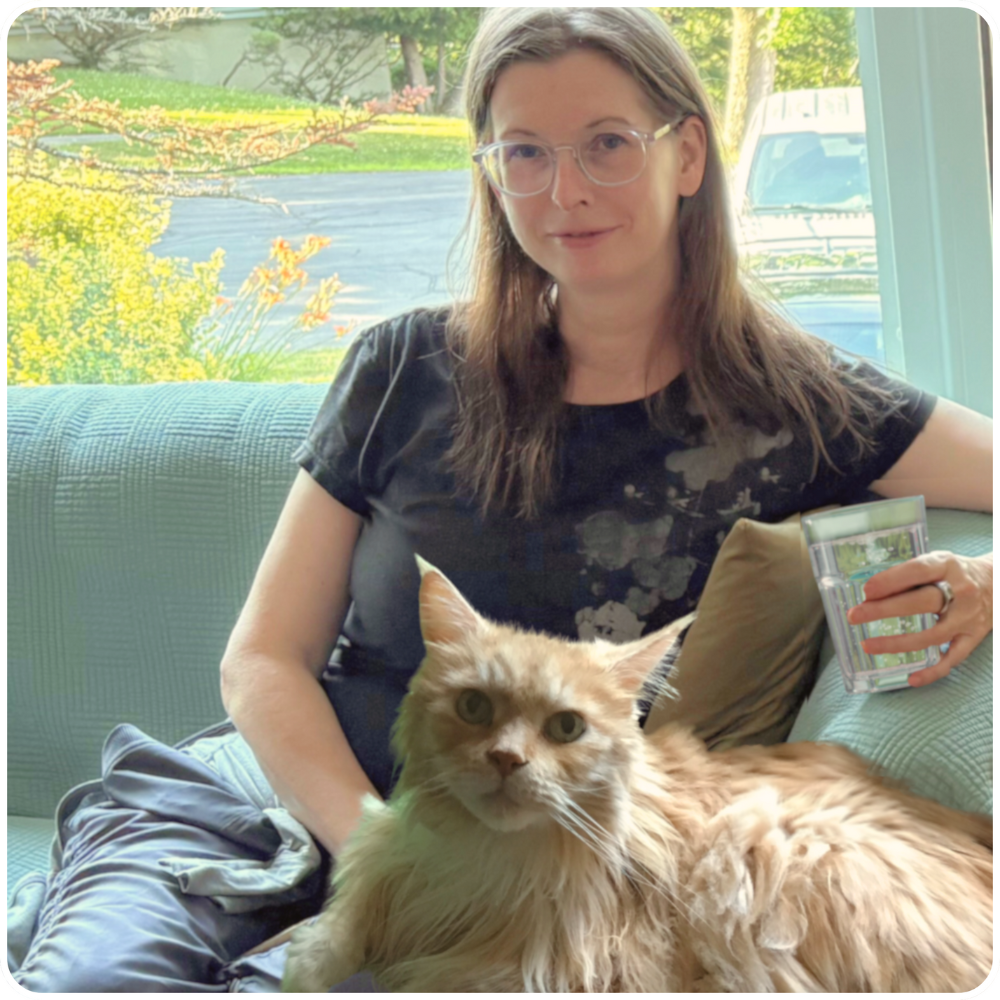
Hi, I'm Carrie! As a native Mainer, Coonie mom and author, I've spent over 14 years helping cat owners understand their Coonies and mixes. Real experience, research-backed insights - that's my approach. Happy, healthy cats - that's the result!
Curious about my experiences? Check out my About Page!
Let's Connect! ⬇️
COPYRIGHT © 2010 - 2026 MAINE COON CAT NATION | All Rights Reserved
THIS WEBSITE DOES NOT SELL ANY PERSONAL INFORMATION.
