- Home
- Colors
- Red Maine Coon Cat
- Cameo
What Is a Cameo Maine Coon?
We're picking up a male kitten next month and the breeder described him as a "cameo Maine Coon." I've never heard that term before. I'm familiar with Red and Cream, but not cameo.
Is cameo an official color? Is it the same as Red Silver? And what should I expect him to look like as he grows?
-Doug in Texas
Reply:
Hi Doug, you're not missing anything. When breeders say cameo, they're usually referring to what's formally called Red Silver.
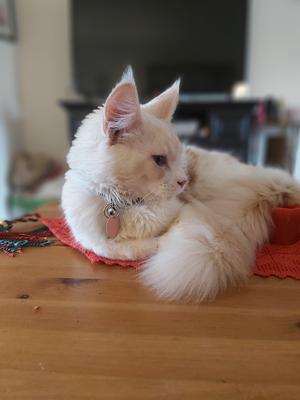 Remy, from our 2020 Albums
It's a red-based coat that carries the silver gene, which lightens the base of each hair. That creates a pale, almost frosted undercoat with warmer color concentrated toward the tips.
So visually, the look can vary quite a bit. Some have visible tabby striping, like a softer version of a Red Classic Tabby.
Others appear much lighter overall, almost creamy or beige with only subtle shading. Both are often described with the same label.
There's so much to know about this awesome breed! Get Maine Coon Musings, our free Daily Digest, for something new every morning:
Is "Cameo" an Official Color?
In most standards, the formal term used is Red Silver. "Cameo" isn't listed as a separate base color. I's a traditional label that breeders and exhibitors often use for red-based coats that carry the silver gene.
So on paperwork or in show catalogs, you'll typically see Red Silver. In conversation, you may hear cameo instead.
They're referring to the same general coat description, just using different terminology.
If you'd like to see how that differs from a solid Red coat, compare it with our Red page, and for the silver variation, check out the Red Silver gallery.
What Does a Cameo Maine Coon Look Like?
Most have a very light, creamy base that can look ivory, buff, or soft ginger-cream rather than truly silver. The warmer tone sits on the outer guard hairs, which creates a layered effect.
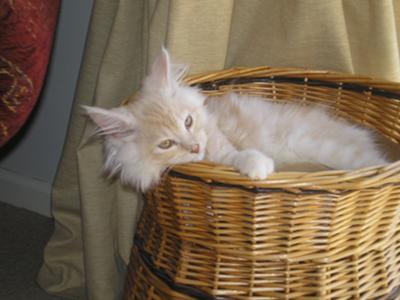
The contrast is usually most visible on the firmer coat areas like the head, along the top of the back, the core of the tail, and the outer legs.
The fluffier ruff and britches often look lighter and more blended.
Lighting changes how it appears. Indoors the coat may look pale beige. In direct sun, the lighter base and warmer tipping become much more obvious.
"Cameo" is used loosely in real life. It can be used:
- For Red Silver Tabby.
- For Red Silver Shaded.
- For Cream Silver.
- For anything pale + warm + silvered.
Maine Coon Cat Nation's own mascot, Leo, held this label from his breeder "Classic Red Silver (Cameo) Tabby" - note the cameo in parentheses, like a nickname or informal descriptor.
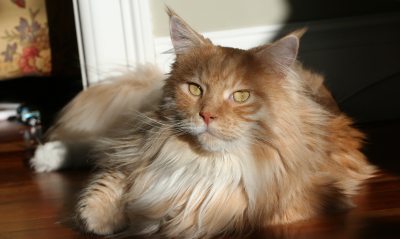 The "darkest" Leo ever looked
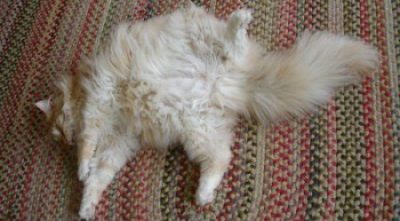 Leo's very pale, creamy belly
Now, feast your eyes on a different way Cameo can look - meet Jojo!
Lisa in California shares her 21lb boy, saying his registered name is "Joseph aka Goggles," and: "Jojo is an 11 Year old Maine Coon Cameo that hails from San Diego. Like most Maine Coons, he is smart, and impatient when he feels its time to eat.
He goes through the house opening doors to search for everything he has already seen. We love him dearly.
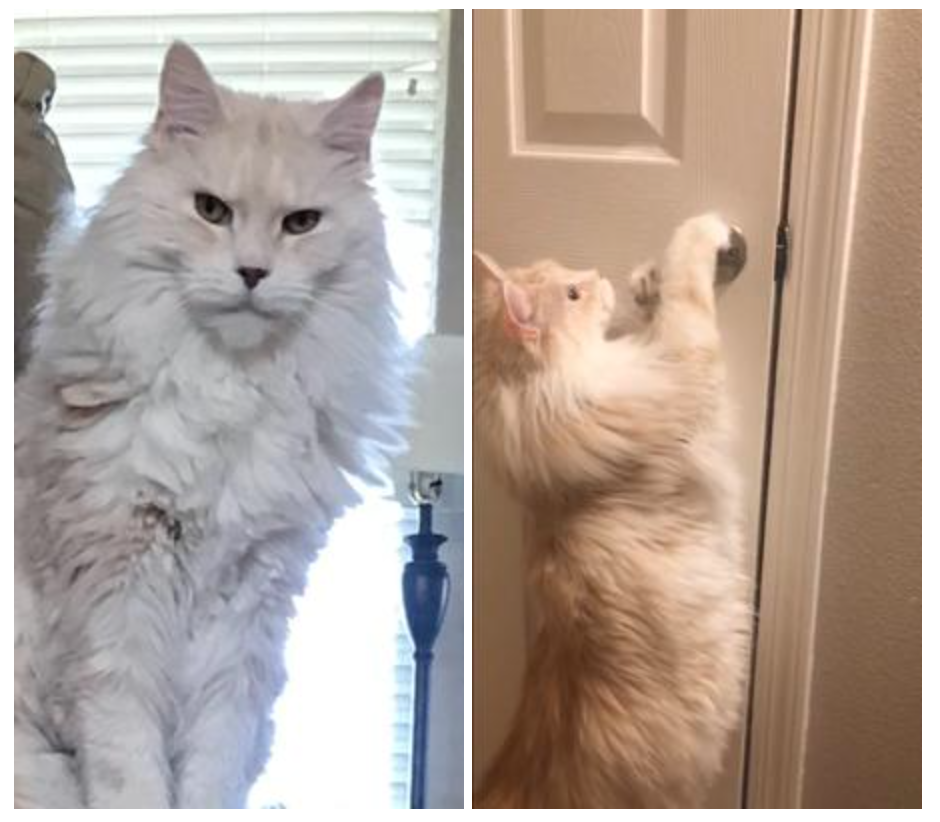 Note how different Jojo looks in different lighting
In other words:
- Leo, a Classic Red Silver Tabby (clearly patterned).
- Jojo, a soft, almost whipped-vanilla, very low contrast.
Both are labeled the same word, because:
Cameo is an umbrella label most often used for Red Silver, but the look can vary widely depending on pattern and intensity.
Is Cameo the Same as Red Silver?
In most cases, yes. Red Silver is the formal genetic description. Cameo is a commonly used label for that same coat. One is technical language; the other is conversational shorthand.
They're referring to the same basic combination of a red-based coat influenced by the silver gene, just using different terminology.
There's so much to know about this awesome breed! Join 1,200+ fellow Maine Coon lovers and get our free Daily Digest, for something new every morning:
Cream, Buff and Other Terms
"Is Cameo the same as Cream or Buff?"
They are not technically buff and they are not technically Cream, but people sometimes describe them that way casually. This is how things can get confusing!
- Red Silver (most accurate formal term)
This is what "cameo" usually refers to in standards.
- Cream Silver
If the base pigment is diluted (cream instead of red), some very pale individuals may fall here. These can look almost beige.
- Buff
"Buff" is not a formal Maine Coon color term. It's a casual word people use when something looks pale tan or beige. It's descriptive, not genetic.
- Cream (by itself)
Cream is a diluted Red without the silver gene. A true Cream will not have that lighter root/guard hair contrast pattern caused by silver.
Can a Kitten Change From Red to Cameo, or Vice Versa?
Young kittens often look softer and more blended because their baby coat is fluffy and uniform.
As the adult coat comes in, the firmer outer hairs develop and the contrast becomes clearer.
The lighter base remains, but the warmer surface tone can look deeper or more defined, especially along the back, head, and tail.
So a kitten might develop soft yet distinctive ginger markings like Leo, or more subtle ones like Jojo.
It isn't a true color change. It's the coat maturing and separating into its natural layers.
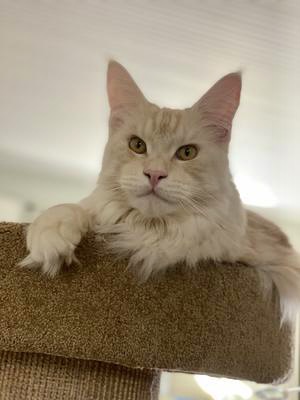 Bodhi is featured on our Red Page!
What to Expect
As a cameo coat matures, the layering becomes more obvious. You'll start to see that creamy base sitting underneath richer outer hairs, especially along the back and through the tail. The longer the coat grows, the more dimension it has.
In natural light, these coats can be stunning. There's a softness to them, but also depth, almost like the fur is glowing.
Some lean warmer and more ginger, others stay pale and smooth, but either way, they have a glow that's hard to miss.
If you're drawn to this look, take some time browsing the full range on our Colors Section. Seeing them side by side makes it easier to recognize the subtle differences, and to appreciate just how beautiful every shade is!
Love this site?
You’ll love our magazine too.
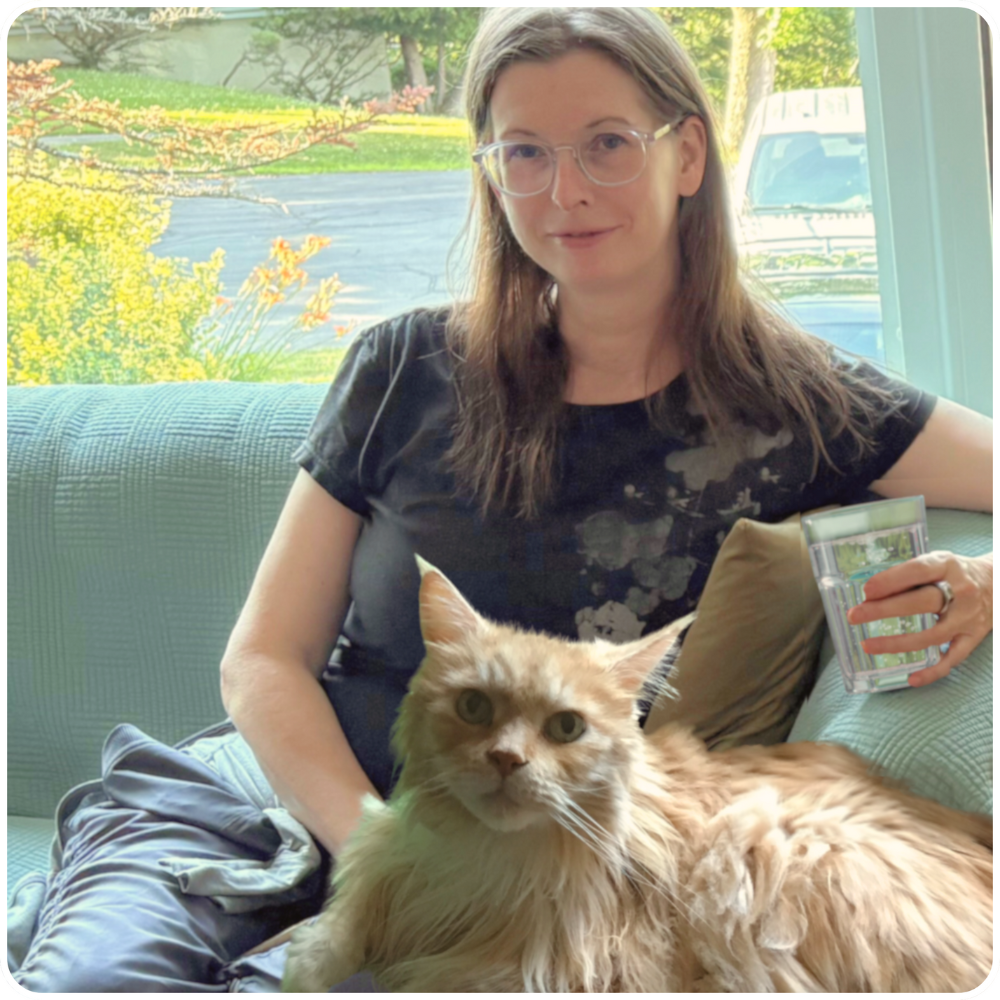
Hi, I'm Carrie! As a native Mainer, Coonie mom and author, I've spent over 14 years helping cat owners understand their Coonies and mixes. Real experience, research-backed insights - that's my approach. Happy, healthy cats - that's the result!
Curious about my experiences? Check out my About Page!
Let's Connect! ⬇️
COPYRIGHT © 2010 - 2026 MAINE COON CAT NATION | All Rights Reserved
THIS WEBSITE DOES NOT SELL ANY PERSONAL INFORMATION.
