- Home
- Maine Coon Cat Health
- Neuter/Spay Questions
Neutering And Spaying Maine Coon Kittens
Neutering and spaying questions - when to do it, whether it affects the eventual size of a male, I.V.'s and more.
Here are our community questions and answers related to neutering and spaying. Just scroll down to read more about:
If you can't get enough of Maine Coons, you'll love our fun, free Daily Digest!

What Are the Consequences of Early Neutering in Male Maine Coons?
by BZ in Florida
Hey,
I have a Maine Coon MALE cat who is currently 1 year, 1 month, and 8 days old.
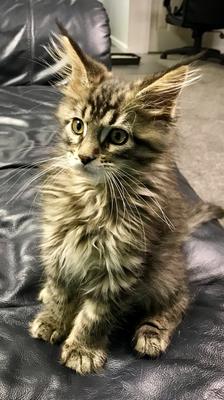 Baby Zeke
He weighs about 16.8 pounds, though he’s not very muscular.
My vet mentioned that Maine Coons aren't a particularly muscular breed, but I’ve seen a lot online that says otherwise.
He is not overweight - he barely has a tummy pouch. That said, he will eat everything in sight until it's gone. If I left kibble out all the time, he’d probably gain weight very quickly.
Right now, I feed him grain-free canned food about 98% of the time. I got him from Poland when he was 4 months old.
Here’s my concern: he was neutered when his testicles ("eggs," as they called them - haha) were first identified.
That means he was neutered at 3 months and 9 days old, which now seems very young. I've since read that many recommend waiting until at least 6 months.
So now I'm wondering:
- What are the consequences of neutering a male cat this early?
- I’ve read that it may result in a smaller urethra. Does that increase the risk of urinary blockages or stones?
- Are there other health concerns I should be aware of?
- What about size - could early neutering affect how big he ends up?
Thanks!
Comments:
Nothing Like a Maine Coon Companion
by Opal
My husband gave me a Maine Coon, Horatio, in the late 1990s. He lived to be 21 years old.
We now have two feral kittens who are about a year old. I love them and enjoy their companionship, but no cat will ever quite replace my smart, dog-like, playful, and affectionate Maine Coon boy.
Shouldn't be an issue
In general, many feline organizations have started encouraging spaying and neutering as early as around 12 to 16 weeks.
There are some concerns people talk about with early neutering, like a narrower urethra, possible weight gain, or even bone development differences.
There's also always some risk with anesthesia when they’re very young. That said, most still feel it’s better to neuter earlier rather than later.
Unneutered males tend to be more aggressive, may spray, and are more likely to roam or try to escape.
Of course, there’s also the risk of them getting another cat pregnant if they do get out.
Consequences of Neutering Maine Coons Early
by: Maine Coons Mom
I've heard that neutering a male cat early can keep them from reaching their full size.
I've also read that males who aren't neutered, or are neutered later, can be more prone to urinary tract issues.
My own boy was neutered after he matured, and he's had urinary tract issues twice.
Since then, I’ve changed his diet by cutting out dry food, avoiding fish-heavy foods, and adding more moisture to his meals. I also got him a water fountain so he drinks more.
He hasn't had any issues since. He's very muscular and weighs about 19 pounds.
I’m not a vet, but that’s what I’ve read and experienced. Hope it helps.
Purring During Neutering: What Does It Mean?
by: Judy in the UK
Hi Carrie,
Buddy was neutered on 16/12/10. While he was waiting for me, he started kneading the bedding in his carrier, which he's never done before. Perhaps he was trying to calm himself?
At the vet, he purred loudly through his examination, and I was told he continued purring during the short procedure. The vet said that in her experience, this was very unusual.
I've read that purring can sometimes be a negative sign as well, so I wondered if that might have been the case here. Have you or anyone else come across this? I’d be interested to hear.
Also, we can always tell when snow is coming. He cleans around his right ear and walks around completely fluffed up!
Reply:
Hi Judy,
Aww, how is he feeling now? At least it's behind you!
Leo purred loudly through his first big exam at about Buddy's age, even during his shots. He was under anesthesia for the procedure itself, though.
During the exam, it could go either way. You know his personality. He may have been genuinely relaxed and friendly, like Leo was. That easygoing, social nature is something you often see with this breed.
On the other hand, some cats do purr when they’re nervous. It can be a self-soothing response. You were there, so you likely picked up on his overall behavior.
Things like rubbing, leaning in, or vocalizing tend to point to comfort, while flinching or pulling back would suggest stress.
The carrier time and procedure are a bit different. From his perspective, that’s when things likely felt more uncertain. The purring during that time was probably his way of calming himself, just like you suspected.
I wouldn't look at it as a negative sign. It's more about how they cope in the moment. Poor boy. That's a lot in one visit.
And that weather prediction habit is fascinating. Very cool.
~Carrie
Join our free Email Group for daily posts!
Is an IV Necessary During a Male Cat Neuter?
I understand that having a male kitten neutered is a very quick procedure.
Our new vet is recommending pre-op blood work and also suggests placing an IV. Our previous vet never offered these, so I’ve been calling around and getting mixed answers from different clinics.
Reply:
Hi,
This is a good question, and it does touch on medical decisions, so I'll stick to sharing what we’ve experienced at our own vet.
In my experience, our pets have always had blood work done before going under anesthesia.
My understanding is that this helps check kidney function and overall health to make sure everything looks good internally before the procedure. It's basically an added layer of safety.
As for the IV, I don't always know whether it was used in every case, but it's generally considered a precaution.
It allows fluids to be given during the procedure, which can support the kidneys and help keep everything stable.
It also gives the vet immediate access in case medication needs to be administered quickly.
Not every clinic handles this the same way, which is why you’re hearing different answers.
The vets who do recommend these steps are typically taking a more cautious, preventative approach.
Wishing your little guy a smooth procedure and quick recovery!
~Carrie
Comments:
IV & Surgery
by KC Harloff
It can depend on how long the surgery takes. Sometimes a simple anesthetic is enough to keep a cat under for the procedure.
If the cat is already unconscious before an IV is placed, they won't feel it.
Personally, I’m not a fan of blood draws. The only time my Maine Coon ever reacted negatively was when he had blood taken from his hind leg.
When Should I Neuter/Spay My New Kitten?
by: Marti in Houston, Texas
I just brought home a new Maine Coon kitten. He is approximately six weeks old. When should I have him spayed?
My daughter had a cat who was spayed very early, and he never seemed to lose the urge to hump the other male cat in the house.
I have several other cats and would really rather avoid that situation.
Thank you so much for your help.
Marti
Reply:
Hi Marti,
First, just to clarify terms, female cats are spayed, and males are neutered. So when you’re looking into this, "neuter" is the term you'll want.
Traditionally, neutering has been done around 6 months of age. More recently, though, there's been a shift toward earlier procedures, sometimes as young as 8-12 weeks.
This is especially common with shelters and some breeders, mainly to ensure it gets done before there’s any chance of accidental litters.
As for the behavior you mentioned, I haven't heard of early neutering causing that specifically.
If anything, an unneutered male is more likely to show those behaviors. Neutering usually reduces or eliminates them, although there can always be exceptions.
In your daughter's case, it may have just been his individual personality.
One thing that does stand out is his age. Six weeks is quite young. Most breeders don’t place kittens until at least 12 to 14 weeks, so that’s something to keep in mind as you move forward with his care.
Since you already have him, you could reasonably wait until around 5 to 6 months, which is what many vets still recommend. If you have both males and females in the house, or if there's any chance of him getting outside, your vet may suggest doing it a bit earlier.
This is definitely one of those situations where your vet's guidance is important, since they can factor in his size, health, and home environment.
All the best,
~Carrie
Comments:
Spay/Neuter Goes by Weight Now
by Gail in Quincy, MA, USA
As a volunteer at our local shelter, we've seen a shift away from going strictly by age. Instead, it's often based on weight. Once a kitten reaches about 2 pounds and is healthy, they’re typically ready to be spayed or neutered.
Medical care has come a long way, and this approach helps ensure kittens are altered before adoption, rather than relying on new owners to have it done later.
Our shelter will not release kittens until they’ve been spayed or neutered.
It's really not something to put off. Along with preventing unwanted litters, it can also help reduce certain health issues as your cat gets older.
Maine Coon Cat Growth And Neutering
My Maine Coon cat is 4 years old will it get bigger after he get neutered he weights 8kils?
Reply:
Hi there,
Neutering shouldn't have an effect on his size. Some theorize that neutered boys are lazier and this makes them 'fat.'
Others worry that neutering will stunt the growth of their boy and he won't get as big as they'd like him to be.
No need to worry. At four years of age, neutering won't effect his growth.
All The Best,
~Carrie
Age a Maine Coon Boy Can Be Neutered Without Affecting Growth
A breeder plans to neuter a Maine Coon boy kitten at around three months of age. Will this affect his growth or development?
Reply:
Neutering at three months of age will not harm a kitten's normal physical development.
Early spaying and neutering has become more common in recent years, especially among breeders and shelters. In many cases, it's done to ensure the procedure is completed before the kitten goes to a new home.
When it comes to size, growth is primarily determined by genetics. A Maine Coon kitten who is meant to grow large will do so, regardless of whether he is neutered earlier or later.
Some people notice subtle differences in appearance, particularly in the head and facial structure. Intact males may develop a more pronounced, square look, while neutered males can appear slightly softer in expression.
With that said, many neutered males still develop large heads and strong features typical of the breed.
If you have any concerns about timing, it's always worth having a quick conversation with your veterinarian. They can give guidance based on your kitten’s health and development.
Comments:
Male neutering
by: Helen
My vet says he prefers to wait until males are about six months old to neuter, to ensure the urethra is large enough to pass crystals in the urine if that ever becomes an issue later in life.
I wanted my MCC to have a more masculine look, so I had planned to wait until he was 8 months old to neuter him.
But by the time he was 5½ months old, his urine started to smell like a tom cat, and I couldn’t get to the vet fast enough! (HaHaHa)
He wasn't marking, but my, oh my, did his urine ever reek of stud cat hormones!
Today, he looks like a big, proud male cat. He's knee-high tall and weighs 21 pounds.
My breeder (who is nationally known) allows male kittens to go to new homes after their first set of vaccinations. You might consider asking your breeder if they would reconsider the timing.
Since the kitten will likely be marked "Not for Breeding Purposes" anyway, another option is to ask the breeder to hold the papers until you’ve had him neutered, and then provide a written statement from your vet confirming the date.
Do You Have a Related Cat Question? Ask Us Here!
Do you have a question? Fill out the form below to get an answer! Give us as much information as you can, so we can best understand your unique cat questions!
« Back to Maine Coon Health

Love this site?
You’ll love our magazine too.

Hi, I'm Carrie! As a native Mainer, Coonie mom and author, I've spent over 14 years helping cat owners understand their Coonies and mixes. Real experience, research-backed insights - that's my approach. Happy, healthy cats - that's the result!
Curious about my experiences? Check out my About Page!
Let's Connect! ⬇️
COPYRIGHT © 2010 - 2026 MAINE COON CAT NATION | All Rights Reserved
THIS WEBSITE DOES NOT SELL ANY PERSONAL INFORMATION.
