Maine Coon Size Guide
Maine Coon size is one of the first things people ask about, and for good reason! This breed is known for being large, but "large" doesn't mean the same thing in every case.
You're probably wondering, "how big do they really get?" "will mine get massive?" or "if I get this breed, what am I in for?"
Are they actually cats of mythical proportions? The huge ones seem to be on social media constantly. Most Maine Coons are bigger than the average domestic cat, with males typically weighing more and growing longer than females.
Not every Coonie is massive, and size can vary based on genetics, sex, and overall build.
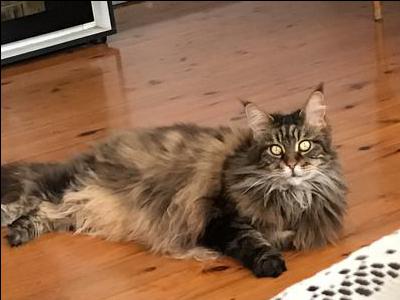
Another important factor is time. This breed matures slowly compared to many others, often taking three to five years to fill out and reach their full adult size.
During that period, their weight, length, and muscle tone develop gradually. Let's talk about what's typical (and what isn’t) so you know what to expect for growth, proportions, and overall presence.
There's so much to know about this awesome breed! Get Maine Coon Musings, our free Daily Digest, for something new every morning:
Average Size
Most adults weigh more than the typical house cat, which usually falls between 8-11 pounds. That difference is noticeable, especially once they reach full maturity.
On average:
- Males: 13-18 pounds
- Females: 8-12 pounds
Some individuals fall outside those ranges, and that alone doesn’t mean anything is wrong. Genetics, diet, and overall health all influence final size.
Myth vs. Reality
Myth: They are all uniformly extra-large.
Reality: Size varies more than people expect.
While the breed has a reputation for being massive, not every individual reaches giant proportions. Some grow impressively large, others stay moderate, and both can be perfectly healthy.
Growth also happens over time. Although much of the rapid increase occurs during kittenhood, filling out and maturing can continue for several years.
The goal isn't seeing a dramatic number on the scale. It's steady, appropriate development.
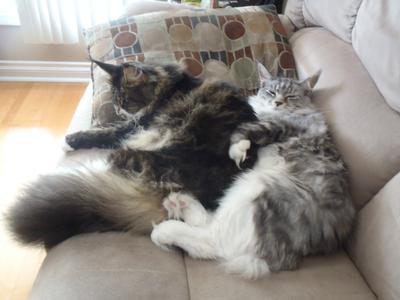 Jesse and Molly
How Long Do They Grow?
Unlike many breeds that reach full size within a year, these cats develop more gradually.
Most continue filling out until around 3 to 5 years of age, even if their height is mostly established earlier.
The early months bring noticeable growth spurts, but full maturity takes longer.
Bone structure, muscle mass, and overall proportions settle in over time, which is why a lanky one-year-old may still look unfinished.
This extended growth period is completely normal. What matters most is steady development rather than rapid gains or dramatic milestones.
Maine Coon Size by Age
This breed grows longer than most breeds - not just in length, but in time. While the first year brings the fastest changes, full maturity takes several years.
An abbreviated timeline of what's typical:
Birth - 4 Weeks
Approximate Weight: .2 - 2 lbs
Rapid change defines this stage. Eyes open around 7-10 days, walking begins, and weight increases steadily. The focus here is survival, nursing, and neurological development - not size comparison.
8 Weeks (2 Months)
Approximate Weight: 2 - 4 lbs
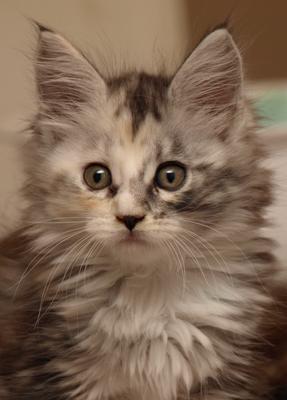
Fully weaned and active. Frame hints begin to show - larger paws and heavier bone structure may suggest a bigger adult, but it's far too early for predictions.
3-4 Months
Approximate Weight: 4 - 8 lbs
This is the first visible growth surge. Length increases, legs stretch out, and coordination improves. Many begin to look lanky rather than round.
5-6 Months
Approximate Weight: 6 - 12 lbs
Rapid growth phase. Some males may already pass 10 pounds. This is often when owners start noticing the difference compared to typical house cats.
Independence increases during this period, and puberty may begin.
8-12 Months
Approximate Weight: 7 - 18+ lbs
Height is often close to adult range, but filling out is far from complete.
Some may appear nearly full-grown, while others still look long and unfinished. Growth slows, but continues.
18 Months - 2 Years
Approximate Weight: 8 - 22+ lbs
Muscle mass increases. Chest broadens, especially in males. Coat becomes thicker and more mature.
They may look adult, but they are still developing.
3-5 Years
Approximate Weight: 8 - 25+ lbs (occasionally more)
Full maturity. Frame, muscle, and proportions settle in.
This is when the "substantial" presence the breed is known for becomes fully evident.
Important Perspective
There is wide variation at every age. Two healthy kittens from the same litter can differ by several pounds.
Steady growth matters more than a specific number.
For a month-by-month breakdown with detailed ranges, see the full size chart below:
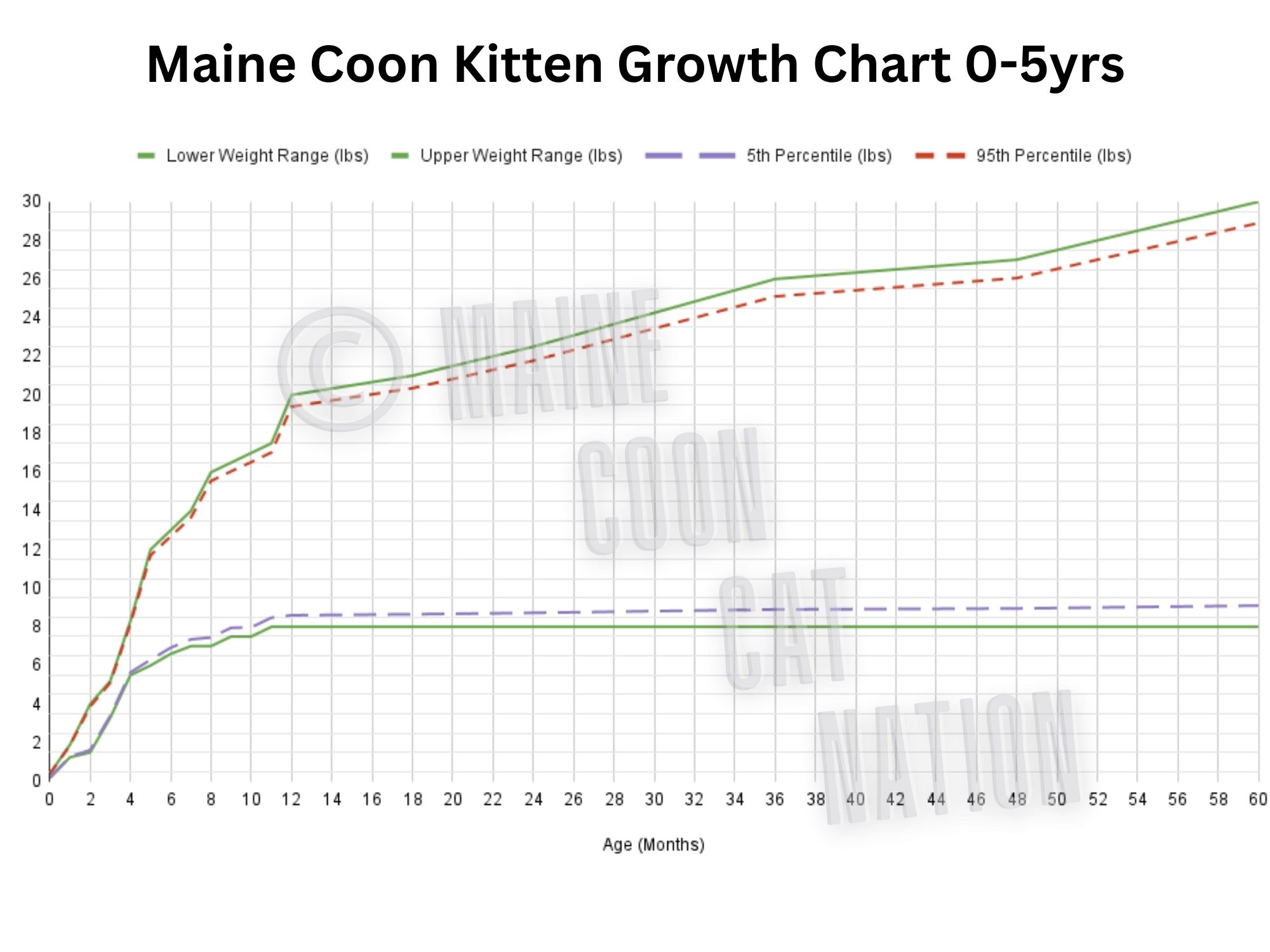
Some owners want a clear picture of growth over time - what a healthy kitten weighs at 8, 12, or 20 weeks, and how those numbers trend into adulthood.
Here you'll find an age-by-age breakdown showing typical weight ranges from birth through full maturity, with lower and upper healthy limits and real examples of range and variation.
Length & Proportions
When people talk about size, they usually jump straight to weight. But have you ever noticed how some of these cats look enormous even before you know how many pounds they are?
That impression comes from length and structure just as much as the number on a scale.
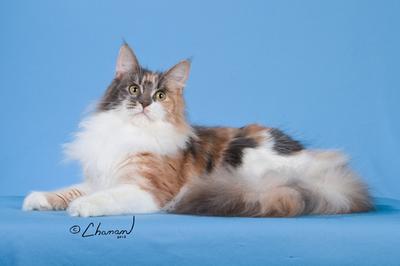
From nose to tail tip, many adults measure close to 40 inches. The tail itself can account for a surprising portion of that length.
When one is stretched across the back of a couch or draped over the arm of a chair, you start to see why they seem so substantial.
Two cats can weigh the same and still look completely different in size.
One may have a longer, rectangular body with extended back legs and a sweeping tail, while another carries more width through the chest and shoulders.
Both can be perfectly healthy, but their proportions change the overall impression.
Shoulder height typically falls somewhere between 10 and 16 inches depending on sex and build.
They don't necessarily tower over every other cat, yet they often appear taller because of the way they stand and the strength in their legs.
Bone structure plays a quiet but important role. This breed is known for heavier bone and deeper chests than most domestic cats.
If you gently run your hand along the ribcage, you can usually feel that solid frame underneath the coat. Mature males, in particular, may develop a broad chest that adds to that powerful outline.
And yes, the coat contributes to the illusion. A full ruff, thick britches, and that long plumed tail can make even a moderate individual look larger than life.
But once you part the fur, the frame beneath it is usually substantial in its own right. That's why they don't suddenly look small after a seasonal shed or a trim. The structure is still there.
How to Measure Your Maine Coon
If you want to know your own cat's proportions, it's fairly easy to get a general idea at home.
Measuring Length:
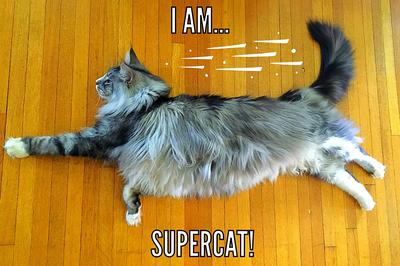
For length, use a soft measuring tape and gently run it along the top of your cat's body, starting at the tip of the nose and following the spine all the way to the tip of the tail.
Let the tape follow the natural curve of their back rather than pulling it tight or trying to straighten them.
It works best when they're stretched out comfortably on their side or lounging on the floor. It helps to do this when they're lounging rather than mid-zoom.
 Griffin
For shoulder height, measure from the floor to the top of the shoulder while they are standing in a normal position. Try not to measure when they're crouched or stretching upward.
For weight, a digital scale works best. Many owners step on a bathroom scale while holding their cat, then subtract their own weight.
More than any single measurement, it's the overall balance of frame, muscle, and proportion that tells the real story.
What Determines How Big They Get?
Why does one grow into a giant while another stays moderate, even within the same breed? It isn't random, but it isn't completely predictable either.
Genetics play the biggest role. If large, heavy-boned cats appear consistently in a pedigree, chances are good their kittens will carry that same substantial frame.
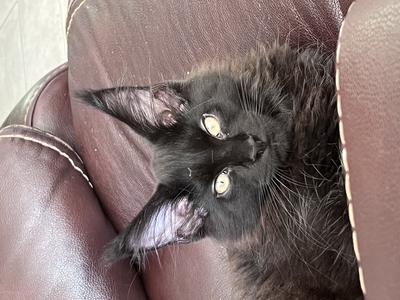
You can often see hints of it early in the paws, the length of the legs, the depth of the chest. Some lines simply trend larger.
Sex matters too, of course. Males usually develop broader heads, thicker necks, and heavier bone. Females often stay more refined. Not always, but often enough that it becomes part of the breed's pattern.
Then there's the question of lines. Some breeders openly promote size. You'll see phrases like "we breed them big," and sometimes they truly do produce impressive cats generation after generation.
 Apollo
But here's something worth thinking about.
The catteries that focus on health, temperament, structure, and long-term soundness often produce beautiful size as a natural result.
They aren't chasing weight, they're strengthening the whole cat. When bone structure is correct and development is steady, that solid frame tends to follow.
There's so much to know about this awesome breed! Join 1,200+ fellow Maine Coon lovers and get our free Daily Digest, for something new every morning:
Nutrition influences healthy growth, especially in those early months. A well-balanced diet supports muscle and bone development, but it won't turn a moderate-framed kitten into a giant. Food helps a cat reach its potential, but it doesn't override genetics.
Overall health: Chronic illness, parasites, or poor early care can limit growth. A thriving kitten with steady development is far more important than having an unusually large sized one.
In the end, size is shaped by a mix of inheritance, biology, and care. Some grow impressively large. Others stay comfortably moderate. Both can represent the breed well.
And if you find yourself drawn to a breeder who talks more about health and temperament than about producing the biggest cat in the room, that instinct may be pointing you in a very good direction.
Big vs Overweight? How to Tell the Difference
It's easy to assume that bigger automatically means better. After all, they're known for their size. So if a cat weighs in at 18, 20, even 22 pounds, that must mean you've got a prime example of the breed… right?
Not necessarily. There's a difference between a large frame and extra weight.
A truly big Maine Coon usually feels solid when you pick him up. Not squishy. Not soft. Solid. There's muscle under there. Width through the chest, and length through the body.
When you run your hands along the ribcage, you can feel the ribs with gentle pressure, but they aren't protruding. They're simply part of a sturdy structure.
An overweight cat feels different. Instead of depth through the chest, you may notice padding over the ribs.
Instead of a natural taper behind the ribcage, the waist disappears when viewed from above. From the side, the belly may hang lower rather than blending smoothly into the body line.
A large-framed cat can weigh 20 pounds and still have visible shape. A smaller-framed cat at that same weight may look rounded and undefined. That’s why the number alone doesn’t tell the story.
Try the simple rib check. Place your hands lightly along the sides. You should be able to feel the ribs without pressing hard, but they shouldn't be sharply visible. There should be a gentle waist when you look down from above. Not dramatic. Just a subtle narrowing behind the ribs.
Muscle also changes the picture. A healthy, well-developed adult often feels firm along the shoulders and thighs. Extra fat feels softer and shifts more under your hand.
This breed does have a natural abdominal "pouch," and it can be mistaken for excess weight. That loose skin along the lower belly is normal and doesn’t automatically mean a problem. It's part of their structure.
They’re meant to feel substantial, not padded. If you're ever unsure, a veterinarian's opinion matters far more than internet comparisons.
Growth patterns and body frames can vary so widely that even littermates often mature into very different-looking adults.
While it can be tempting to assume that the largest Coonie represents the ideal, a well-balanced body with appropriate muscle, proportion, and steady development is ultimately far more important than sheer size or weight.
A broad chest, strong legs, visible structure under the coat is certainly impressive. A steady, healthy body that supports long-term mobility is even more so.
The Largest on Record
It's hard not to wonder how big they can really get.
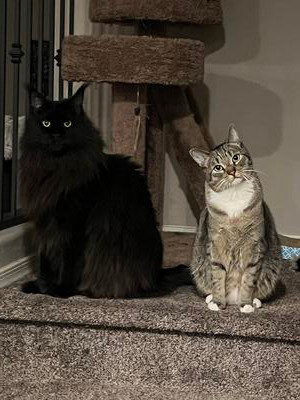
A few individuals have made headlines for extraordinary length, measuring well over four feet from nose to tail tip. Seeing one stretched out end-to-end makes you understand how the breed earned its reputation.
Those record holders are uncommon. They sit at the outer edge of what's possible, not what's typical. They're fascinating to see.
And yes, there are some impressively large cats out there:
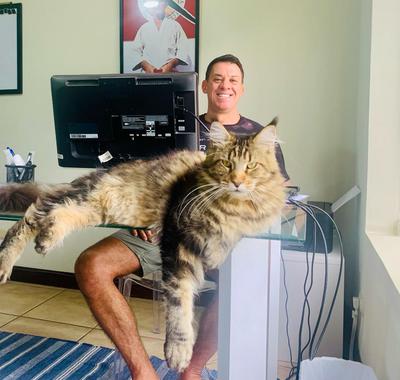
Some grow into truly impressive proportions, with broad chests, heavy bone structure, and that unmistakable "wow" presence.
This is where size stories, record-holders, and real-life examples come into focus - along with a grounded look at what's typical and what's rare.
Not every Coonie becomes enormous, but when they do, it's hard not to stare.
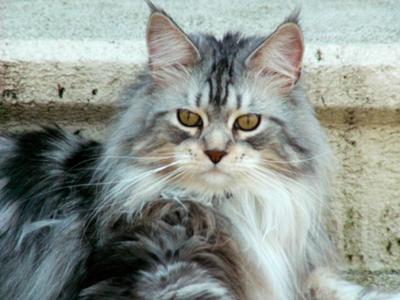
Not every Coonie grows into a towering presence. Some stay compact, lighter-framed, or simply mature at a slower pace than expected.
Genetics, sex, and development timelines all play a role. A smaller adult can still be completely healthy, and still unmistakably part of the breed.
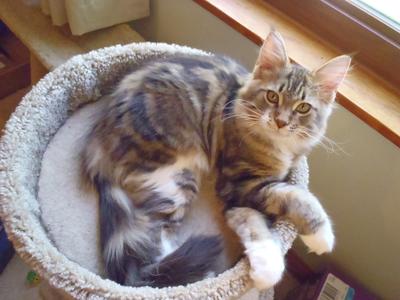
Some people imagine scaled-down versions of this big breed, like mini horses or toy dogs, but there's no officially recognized "mini" Maine Coon.
What you really find are naturally petite individuals or look-alike mixes with some of the same traits.
These smaller sized cats still carry the personality and charm of the breed, just in a more compact package.
Frequently Asked Questions About Maine Coon Size
How big do males get?
How big do males get?
Males typically reach between 13 and 18 pounds, with some growing into the low 20s while remaining healthy. Their size often shows in broader chests, thicker necks, and longer bodies compared to females.
How big do females get?
How big do females get?
Females are usually smaller, averaging around 8 to 12 pounds. Their size tends to be more refined in build, though they still appear substantial compared to many other cats.
When do they stop growing?
When do they stop growing?
Most reach their full size between 3 and 5 years of age. Height develops earlier, but muscle, chest width, and overall proportions continue to mature over time.
Can they be small?
Can they be small?
Yes. Size varies more than many people expect. A smaller adult can still be healthy and well within the normal range for the breed.
Are they bigger than regular cats?
Are they bigger than regular cats?
In most cases, yes. The average house cat weighs around 8 to 11 pounds, while this breed often exceeds that range in both weight and length.
Want to see how size connects with the breed’s other characteristics? Our Maine Coon Characteristics hub brings together structure, proportions, and the traits that make these cats stand out.
Love this site?
You’ll love our magazine too.
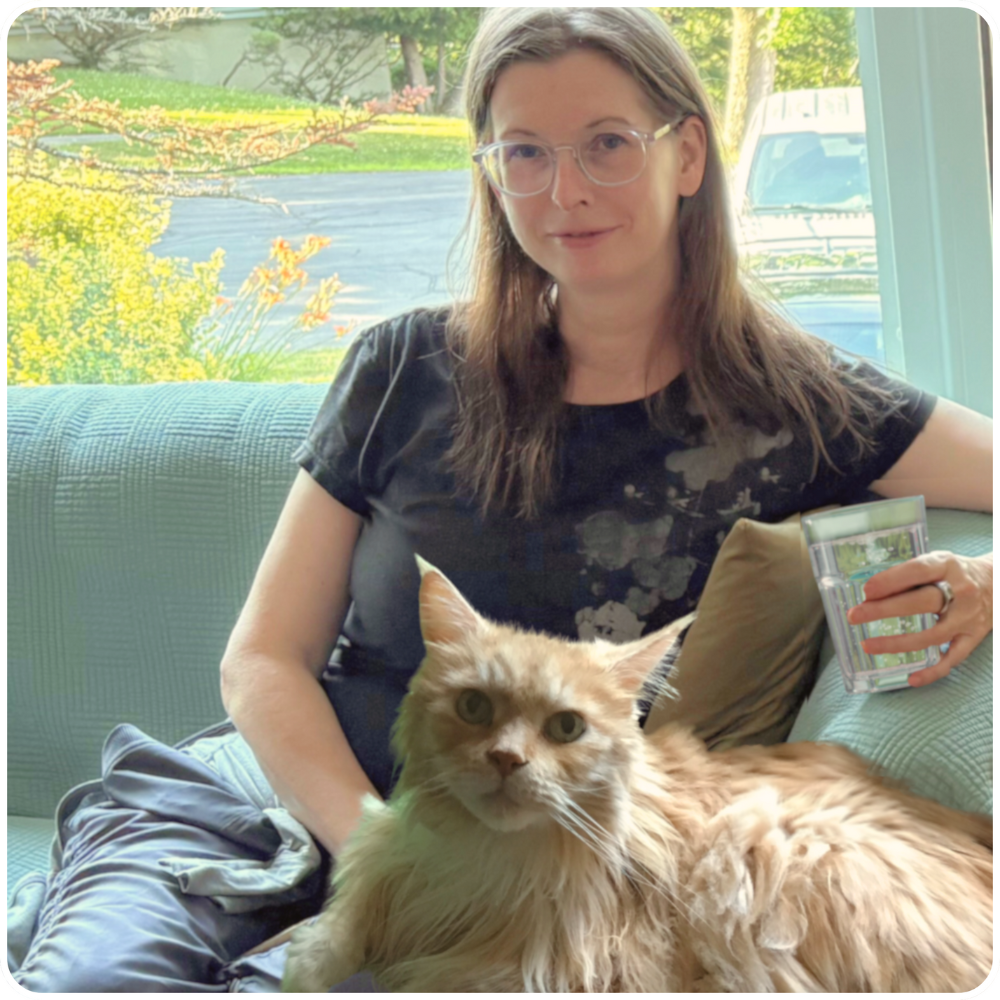
Hi, I'm Carrie! As a native Mainer, Coonie mom and author, I've spent over 14 years helping cat owners understand their Coonies and mixes. Real experience, research-backed insights - that's my approach. Happy, healthy cats - that's the result!
Curious about my experiences? Check out my About Page!
Let's Connect! ⬇️
COPYRIGHT © 2010 - 2026 MAINE COON CAT NATION | All Rights Reserved
THIS WEBSITE DOES NOT SELL ANY PERSONAL INFORMATION.
