- Home
- About Maine Coon Cats
- The Maine Coon Coat
- The Famous Mane
The Iconic Maine Coon Mane and the Ruff Beneath It
When people talk about a Maine Coon mane, they're usually referring to that big, fluffy halo of fur around the chest and neck. It's one of the breed’s most recognizable features, and one of the most misunderstood.
If you can't get enough of Maine Coons, you'll love our fun, free Daily Digest!

You'll often hear mane and ruff used as if they mean the same thing. In everyday conversation, that's understandable.
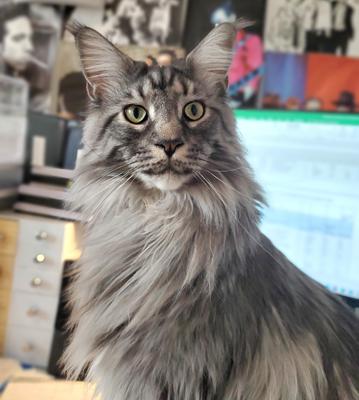
But once you look at coat structure, grooming behavior, and breed terminology, the two aren't quite interchangeable.
The mane is a visual description of how full and dramatic the front of the coat looks overall.
The ruff, on the other hand, is a specific coat feature with its own growth pattern, texture, and purpose.
Understanding the difference explains why some Maine Coons develop that bold, collar-like look over time, while others stay more moderate despite having plenty of length elsewhere.
Knowing what's cosmetic versus structural also helps with grooming, expectations, and recognizing normal coat development as your cat matures.
Why Maine Coons Are Known for a "Mane"
Maine Coons are often described as having a mane, but that look comes from how their coat grows, not from a separate or official coat feature.
This breed is semi-longhaired, which means the coat isn't uniformly long all over the body. Instead, certain areas develop more length and density over time.
The fur around the neck and upper chest tends to grow longer, fuller, and thicker than the fur along the sides or back, creating that dramatic, front-heavy silhouette.
Because Maine Coons evolved as a cold-adapted breed, this thicker neck and chest fur serves a protective purpose. Over the years, as the coat matures, that area often becomes more pronounced, especially in cooler seasons.
The result is a bold, fluffy framing of the face and chest that people naturally compare to a lion’s mane. It's a useful visual description for the overall look created by a mature ruff.
The mane is how the ruff presents itself. It's a recognizable hallmark of the breed’s coat structure.
When the Ruff (and Mane Look) Fully Develops
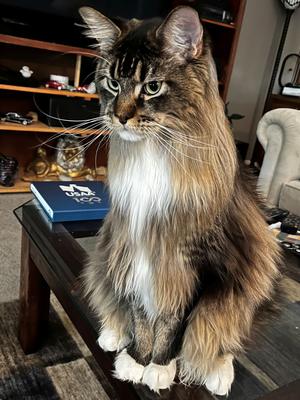
Many Maine Coons don't grow into their full front until much later than people expect.
Kittens and adolescents often look a little unfinished around the chest and neck, even when the rest of the coat is coming in nicely.
The ruff is one of the slowest parts of the coat to mature. For many cats, real fullness doesn't appear until three to five years of age, and it often develops gradually rather than all at once.
This is why younger Maine Coons can look sleeker or less "maned" than the photos you see online.
Hormones also play a role. Neutering can change coat texture and density, sometimes leading to a softer, fuller coat over time.
Seasonal shedding adds another layer of confusion. During warmer months, even cats with impressive winter ruffs may look noticeably lighter or flatter through the front.
If your cat doesn’t resemble the dramatic pictures yet, it usually isn't a flaw or a missing trait. Coat development takes time, and a mature ruff often arrives long after everything else looks finished.
Why Is My Cat's Ruff Thinner in Summer?
Many owners notice this every year. The impressive winter ruff starts looking smaller, the mane around the neck loses some of its volume, and suddenly their cat seems less fluffy than they did a few months ago.
In most cases, that's completely normal. Maine Coons and other longhaired cats often go through seasonal coat changes as daylight hours increase and temperatures rise.
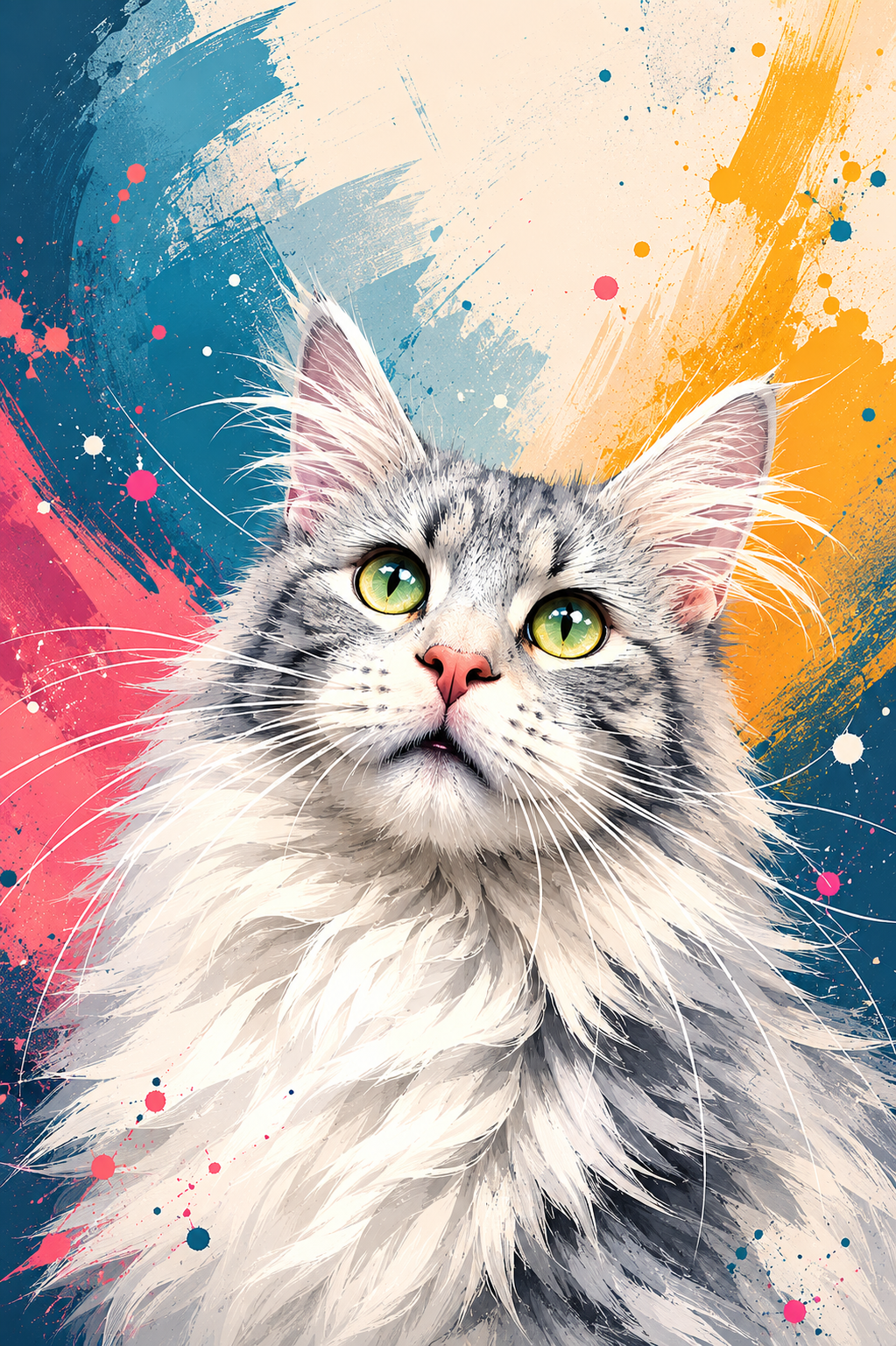
The dense undercoat that helped provide insulation during colder months begins to shed out, and the ruff is one of the most noticeable places this happens.
Some cats seem to lose a surprising amount of fullness.
A thick, lion-like mane in January may look much more modest by July. Owners sometimes worry their cat is losing fur when they're actually seeing a normal coat transition.
Not every cat changes to the same degree. Some keep a fairly full ruff year-round, especially indoor cats living in climate-controlled homes.
Others show dramatic seasonal differences that make them look like a different cat depending on the time of year.
The dense undercoat that helped provide insulation during colder months
What you're looking for is an even change in coat density.
A thinner ruff during summer is usually nothing to worry about. Bald spots, excessive scratching, irritated skin, redness, or patchy fur are different situations and deserve a closer look.
For many Coonies, that magnificent winter mane is simply taking a seasonal break until cooler weather returns.
There's so much to know about this awesome breed! Join 1,200+ fellow Maine Coon lovers and get our free Daily Digest, for something new every morning:
Grooming the Ruff vs Grooming the Mane
The difference between a ruff and a mane really shows up when it comes to grooming.
Ruff fur behaves differently than the rest of the coat. It's denser, grows in a tighter pattern, and sits in a high-friction area where movement, collars, and grooming habits all meet.
Because of that, the ruff is more prone to matting than shoulder or belly fur, even on cats who groom themselves well.
This is also why over-trimming can cause problems. The ruff shouldn’t be cut back just for appearance.
Trimming it too short can lead to uneven regrowth, awkward texture changes, or mats forming as the coat grows back at different rates.
Regular, gentle combing is usually the best approach. A light pass through the ruff a few times a week helps separate dense hairs before they tangle, especially around the "collar" area under the chin and along the chest.
When people talk about "trimming the mane," they’re often referring to the overall look of the front coat.
Without understanding where the ruff actually grows, well-meaning grooming can unintentionally disrupt one of the most sensitive parts of the coat.
Why Some Maine Coons Never Get a Big Mane
Not every Maine Coon develops a dramatic mane, and that's completely normal.
Genetics play a major role in how the ruff forms, including its length, density, and timing.
Some cats inherit coats that grow longer overall, while others develop thicker fur without a lot of extra length.
Coat density and coat length aren’t the same thing. A cat can have a plush, healthy coat and still have a moderate ruff. Seasonal shedding, age, and hormones also influence how full the front looks at any given time.
A bold mane may be eye-catching, but a moderate ruff is still fully breed-appropriate. Coat variation is part of what makes Maine Coons so diverse in appearance.
There's so much to know about this awesome breed! Join 1,200+ fellow Maine Coon lovers and get our free Daily Digest, for something new every morning:
Maine Coon Mane Quick FAQs
"Is "mane" an official term in Maine Coon standards?"
"Is "mane" an official term in Maine Coon standards?"
No. Breed standards refer to the ruff, not a mane. Mane is a descriptive, informal term.
"Can grooming make a mane grow fuller?"
"Can grooming make a mane grow fuller?"
No. Grooming can prevent matting and improve appearance, but it can’t change genetic coat growth.
"Does diet affect ruff development?"
"Does diet affect ruff development?"
Good nutrition supports coat health, but it won’t create a mane where genetics don’t allow one.
Love this site?
You’ll love our magazine too.
Hi, I'm Carrie! As a native Mainer, Coonie mom and author, I've spent over 14 years helping cat owners understand their Coonies and mixes. Real experience, research-backed insights - that's my approach. Happy, healthy cats - that's the result!
Curious about my experiences? Check out my About Page!
Let's Connect! ⬇️
COPYRIGHT © 2010 - 2026 MAINE COON CAT NATION | All Rights Reserved
THIS WEBSITE DOES NOT SELL ANY PERSONAL INFORMATION.
