How Long Until My Cats Get Along?
Everyone asks this question and nobody gives a real answer. Here's a realistic one: it depends almost entirely on your resident cat.
Some cats are sharing a couch within two weeks. Others need the better part of a year.
Maine Coon households tend to move faster, because this breed is unusually tolerant of newcomers compared to most.
The process has four phases, and how long you spend in each one is up to your cats, not a calendar.
If you can't get enough of Maine Coons, you'll love our fun, free Daily Digest!

Phase 1: Separate Everything
New kitten gets her own room with her own litter box, food, water, and something to climb. Your resident cat keeps his territory completely undisturbed, with no surprises and no intrusions.

They'll hear each other, smell each other under the door, and start building a picture of who this newcomer is without any pressure to react.
Feed them on opposite sides of the closed door from day one.
It sounds simple but it does a lot of work - every mealtime becomes a positive association with the other's scent.
Phase 2: Scent Swapping
Before they ever see each other, let them really know each other.
Swap a blanket or a piece of bedding between rooms so each cat can investigate at their own pace.
Some owners also rub a cloth on the new kitten's face and leave it near the resident cat's food bowl. Watch the reaction - mild curiosity is great, hard staring or puffing up means stay in this phase a little longer.
Don't rush it. A few extra days here saves weeks of setback later.
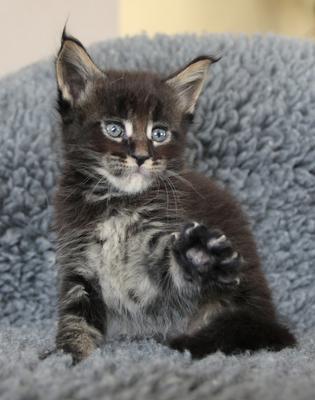
Maine Coons are particularly laid back and non-territorial, and generally see no threat from cute fuzzy kittens. They seem to know their own kind!
Still, introducing a new kitten to a resident cat should be handled with care.
Obviously, you can't prepare your adult cat for the new arrival. It's very helpful to keep them in separate spaces at first.
Try to have your older cat confined to a closed room when you enter the house.
Then place your kitten in his confined place, with his own food and water bowls, litter box and scratching post if desired.
Lastly, let your current cat loose and watch her behavior. She will probably pick up the new scent and know exactly where the kitten is. If she sits by the door curiously, great!
If she sticks her paw under to play with the kitten, lucky you! This is a great time to break out the treats.
If your first cat shows signs of stress, that's ok too. Just give her time and lots of positive reinforcement.
If there ever was a time to spoil your older cat with treats and attention, this is it!
Once you are sure your first cat is not stressed about the situation (and this could take a while!) it's time to let them see each other.
Use your judgment to decide if the cat can come and sniff the kitten. Take it from there!
It all comes down to utilizing separate locations, reading your older cat's reactions, understanding if she's stressed, and generally being in tune with her.
Use Positive Experiences: In cat introductions, it is very helpful for your existing cat to associate the kitten with good things.
After initial introductions, but before they are actually together, try feeding them on each side of the pet gate or screen door where they can see each other with visual contact.
Move the food bowls closer to the gate and each other over time.
Phase 3: Visual Contact
Now they get to see each other, but still with a barrier between them. A cracked door or a screen door all work well - baby gates only if they're kitten-proof, since most kittens treat a standard one as a climbing wall.
Let them make eye contact briefly during mealtimes, then separate again.
Hissing at this stage is completely normal and doesn't mean the introduction is failing - it means your resident cat is setting a boundary, which is healthy communication.
Keep sessions short and always end on a calm note.
There's so much to know about this awesome breed! Join 1,200+ fellow Maine Coon lovers and get our free Daily Digest, for something new every morning:
Phase 4: Supervised Together Time
The door opens, but you're in the room. Keep first sessions short, ten or fifteen minutes, and don't intervene unless someone is genuinely cornered or in distress.
Some posturing, chasing, and swatting is normal and part of how cats negotiate rank.
Redirect with a toy if tension builds, and gradually extend the time together as both cats show they can share the same space without the tension spiking.
Then one day you realize you haven't been thinking about the introduction anymore. They're sharing the house without much fuss.
Maybe they're wrestling, grooming each other, or squeezed into the same cat tree. Maybe they're simply comfortable living side by side.
Cats don't have to become best friends to become good housemates, and for many families, that's exactly what happens.
In an all-Coonie household, you might fly through all four phases in an afternoon!
With an older, more "opinionated" resident cat, let them set the pace - pushing it only makes the whole process longer.
« Return to Introducing Cats for more advice on bringing a new cat home and helping everyone adjust.

Love this site?
You’ll love our magazine too.
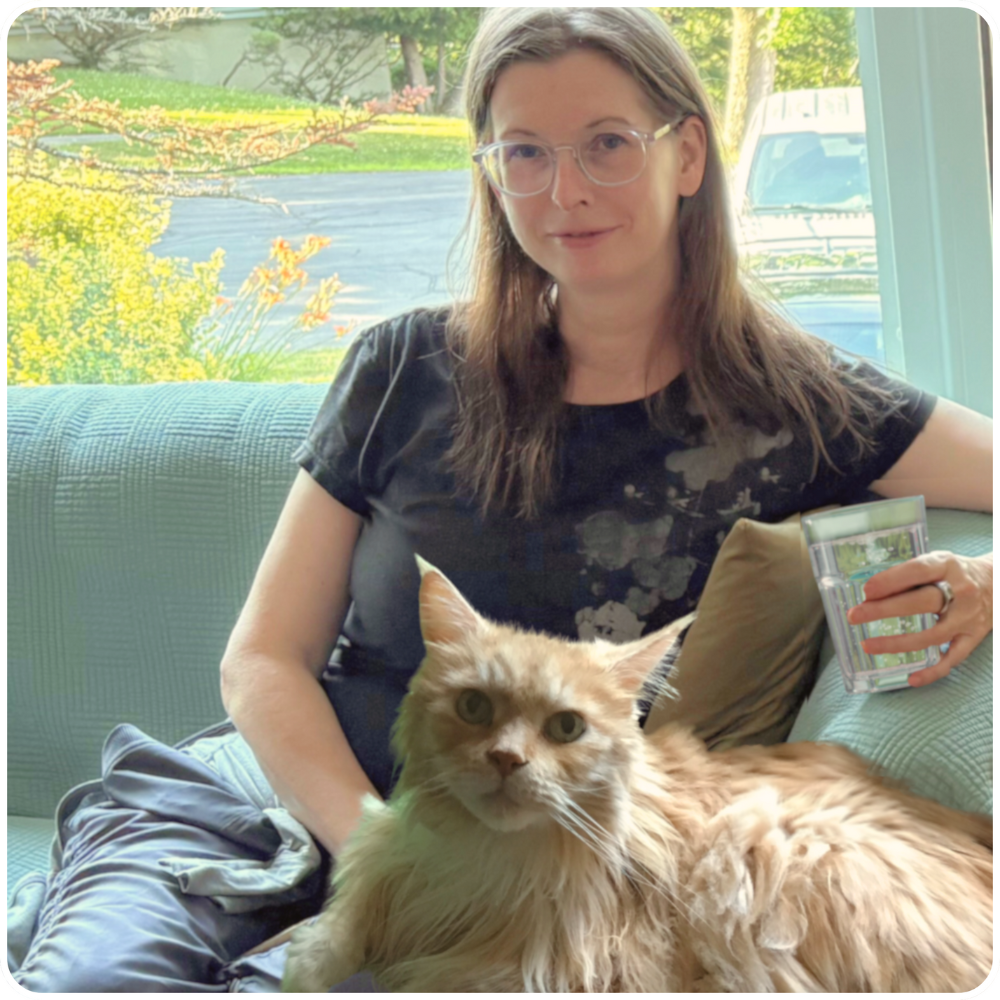
Hi, I'm Carrie! As a native Mainer, Coonie mom and author, I've spent over 14 years helping cat owners understand their Coonies and mixes. Real experience, research-backed insights - that's my approach. Happy, healthy cats - that's the result!
Curious about my experiences? Check out my About Page!
Let's Connect! ⬇️
COPYRIGHT © 2010 - 2026 MAINE COON CAT NATION | All Rights Reserved
THIS WEBSITE DOES NOT SELL ANY PERSONAL INFORMATION.
