- Home
- Litter Box Care
- Tracking Litter
My Maine Coon Tracks Litter Everywhere. What Can I Do?
If you share your home with a Maine Coon, you've probably stepped on a piece of litter barefoot at least once today.
I have swept around that litter box more times than I can count, picked up stray pieces from the hallway, and wondered how litter managed to travel so far from where it started.
If you can't get enough of Maine Coons, you'll love our fun, free Daily Digest!

Maine Coons and other long-haired breeds are especially prone to this.
Those impressive toe tufts, furry paws, and fluffy britches can carry bits of litter out of the box and into the rest of the house.
To some degree, it's simply part of living with a heavily coated breed. But a few changes to grooming, litter choice, and box setup can make a real difference.
Why Maine Coons Are More Likely to Track Litter

Coonies have big paws, and larger paws mean more surface area for litter to cling to.
Those famous toe tufts may look adorable, but they act like tiny brushes, catching litter particles as your cat digs, covers, and climbs out of the box.
Long fur on the back legs and britches can pick up litter too, particularly if the litter is lightweight or dusty.
The result is a cat that leaves the box carrying a few unwanted souvenirs, deposited throughout the house one step at a time.
The Type of Litter
Fine, lightweight litters travel the farthest. Small particles work their way into toe tufts and fur between the paw pads, then fall off gradually as the cat moves through the house.
Larger pellets and chunkier litters tend to track less because they're less likely to become trapped in the coat.
The tradeoff is that some cats don't enjoy digging in larger materials as much as traditional litter.
If tracking has become a daily frustration, experimenting with litter size, weight, and texture may produce better results than buying another mat.
Check the Fur, Not Just the Floor
When owners get frustrated with litter tracking, they often focus on the litter box, the mat, or the litter itself.
Sometimes the real culprit is attached to the cat.
Paw Fur and Toe Tufts
Take a look between the paw pads and around the toes. If the fur is long enough to brush the floor when your cat walks, it's collecting more litter than you realize.
Carefully trimming excess fur between the paw pads helps reduce tracking without changing the look of the foot.
Britches and Rear Leg Fur
Long fur on the back legs and britches can pick up litter as a cat turns, digs, or exits the box. Some owners lightly trim these areas too.
Consider a Sanitary Trim
If litter or debris around the rear end is a recurring issue, a modest sanitary trim can make a noticeable difference without dramatically changing your cat's appearance.
Other Things That Help
Use a Larger Litter Mat
A larger litter mat gives litter more opportunity to fall away from the paws before the cat reaches the rest of the house. Small mats don't do much.
Evaluate Box Placement
Box placement makes a difference too. If the box opens directly into a high-traffic area, tracked litter spreads fast.
A spot where the cat takes a few extra steps before reaching carpet or furniture helps contain it.
Don't Overfill the Box
A cat digging enthusiastically through several inches of litter can launch surprising amounts of it outside. Less depth often means less scatter.
Keep Up With Grooming
Regular grooming keeps fur from getting too long around the paws, legs, and rear, which are the areas most likely to collect litter.
Litter tracking is one of the small tradeoffs of living with a heavily coated breed.
Focus on the whole system rather than any single fix - litter type, fur length, box setup, and grooming habits all play a role. A few small adjustments go a long way.
« For more on litter box setup and keeping things running smoothly, head back up to Litter Box Care.
Love this site?
You’ll love our magazine too.
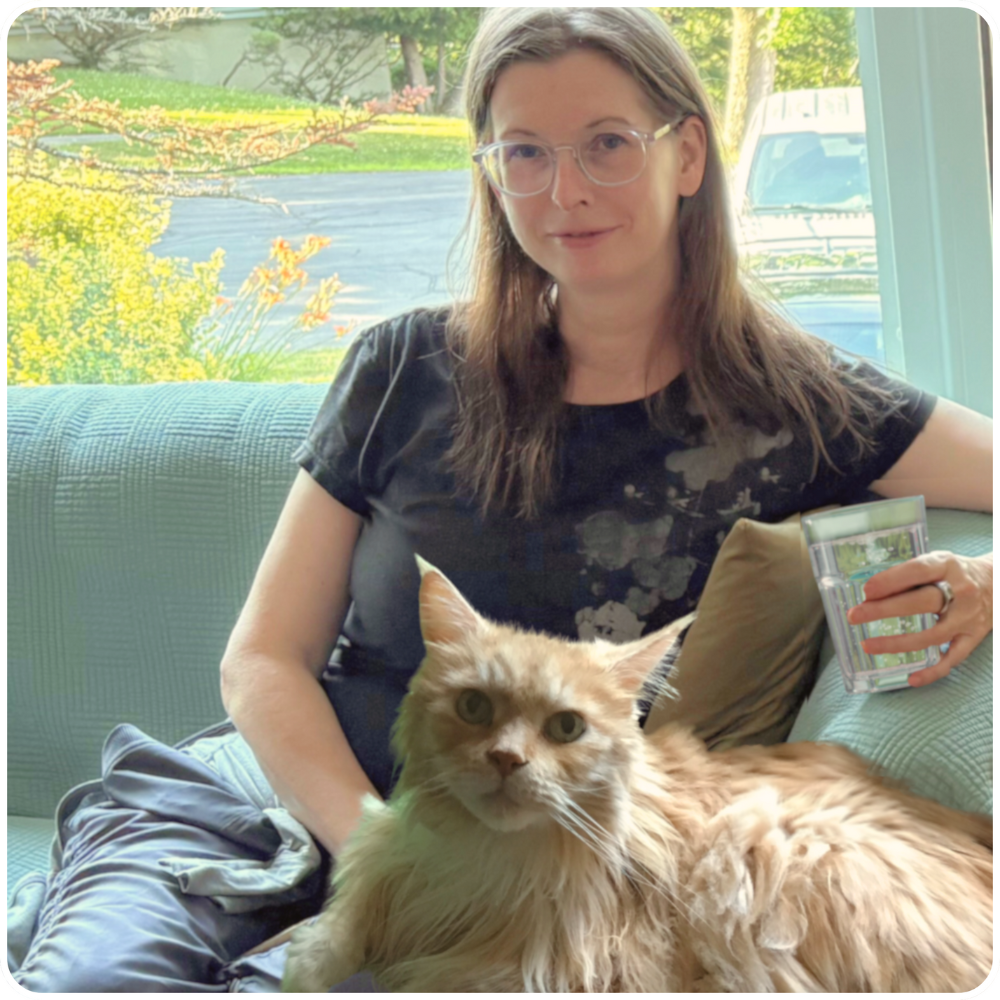
Hi, I'm Carrie! As a native Mainer, Coonie mom and author, I've spent over 14 years helping cat owners understand their Coonies and mixes. Real experience, research-backed insights - that's my approach. Happy, healthy cats - that's the result!
Curious about my experiences? Check out my About Page!
Let's Connect! ⬇️
COPYRIGHT © 2010 - 2026 MAINE COON CAT NATION | All Rights Reserved
THIS WEBSITE DOES NOT SELL ANY PERSONAL INFORMATION.
